

Jasper: The Opaque Silica Mineral Where Impurities Create Perfection
No two pieces of jasper are ever identical—and that is not a coincidence, but a geological rule. Jasper is an opaque variety of microcrystalline quartz whose identity is defined not by purity, but by controlled chaos. Iron oxides, manganese, clay minerals, and organic matter transform otherwise uniform silica into endlessly unique natural artworks.
This mineral is a prime example of how impurity chemistry and diagenetic conditions can override crystalline uniformity to produce some of the most visually complex stones in geology.
What Is Jasper? Mineralogical and Chemical Definition
Jasper is a microcrystalline variety of quartz (SiO₂) characterized by its opacity and high impurity content. Unlike clear quartz, jasper forms in environments rich in mineral inclusions that disrupt crystal transparency.
- Chemical composition: SiO₂ with variable impurities
- Mineral class: Silicates (Quartz group)
- Crystal system: Trigonal (cryptocrystalline structure)
- Hardness: 6.5–7 (Mohs scale)
- Luster: Dull to waxy
The opacity of jasper is directly caused by microscopic inclusions that scatter light rather than transmitting it.
Why Jasper Is Always Unique: The Role of Impurities
Unlike many gemstones valued for purity, jasper is defined by its contamination history. Its visual identity is controlled by trace elements and sedimentary processes.
Common impurities include:
- Iron oxides (hematite, goethite): red, yellow, brown coloration
- Manganese oxides: black dendritic patterns
- Clay minerals: earthy tones and banding
- Organic compounds: dark green to black hues
Geochemical insight: Slight variations in redox conditions during silica precipitation produce radically different patterning even within the same deposit.
Formation Process: How Jasper Develops in Nature
Jasper forms through silica-rich sedimentation and diagenesis, often in volcanic or hydrothermal environments.
Primary formation mechanisms:
- Silica gel deposition in volcanic ash beds
- Hydrothermal fluid infiltration into sedimentary rocks
- Replacement of organic-rich limestone or shale
Trade secret from mineralogy labs: Jasper often preserves ghost structures of original sediment layers. Under microscopic analysis, faint bedding patterns reveal the rock’s sedimentary ancestry despite full silicification.
Over time, amorphous silica gels harden and recrystallize into interlocking quartz microcrystals, locking impurities in place permanently.
Types of Jasper and Their Geological Signatures
Jasper is not a single material but a broad category with multiple varieties:
- Red Jasper: iron oxide-rich, highly stable oxidation state
- Brecciated Jasper: fragmented and re-cemented structure
- Picture Jasper: scenic banding from sediment layering
- Ocean Jasper: orbicular patterns from rhythmic mineral precipitation
Each type reflects a distinct geochemical environment and fluid history.
Identification Techniques Used by Professionals
Gemologists and geologists rely on multiple diagnostic methods to confirm jasper:
- Hardness test: scratches glass but not steel
- Fracture: conchoidal to uneven
- Microscopic texture: microgranular quartz aggregates
- Density: slightly variable due to inclusions
Expert field method: A hand lens often reveals micro-inclusions of hematite or clay aligned along former sedimentary layers, confirming sedimentary origin rather than volcanic glass.
Lapidary Challenges and Cutting Strategy
Although jasper is relatively hard, its internal heterogeneity requires advanced cutting strategy.
Key lapidary considerations:
- Directional hardness variations due to inclusions
- Risk of hidden fracture zones in brecciated material
- Uneven polishing response between mineral phases
Professional technique: Cut orientation is chosen not for crystal symmetry, but for visual storytelling—lapidaries often map patterns before slicing to maximize scenic composition.
Silicon carbide wheels are preferred during preforming due to their ability to handle mixed mineral hardness without uneven wear.
Jasper in Geological Time and Environment
Jasper deposits form over millions of years in environments with fluctuating chemistry.
Common geological settings include:
- Volcanic tuff layers altered by silica-rich fluids
- Marine sedimentary basins with iron-rich pore waters
- Hydrothermal alteration zones around volcanic systems
Geochemical insight: Jasper often forms during low-temperature diagenesis where silica replaces original sedimentary material molecule by molecule.
Durability and Practical Use
With a Mohs hardness of up to 7, jasper is durable enough for jewelry, carvings, and ornamental objects. However, its internal heterogeneity requires careful handling during shaping and polishing.
Its toughness comes from interlocking quartz microcrystals rather than perfect cleavage planes, making it resistant to breakage.
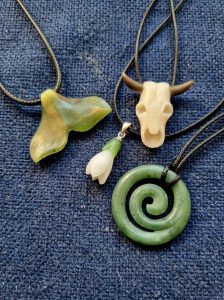
For comparison, softer ornamental materials require more cautious handling. In contrast, nephrite jade provides exceptional toughness due to its fibrous crystal structure.
Nephrite jade pendants are available for purchase on our website, stone-flower.com, offering handcrafted durability combined with traditional artistry.
Why Jasper Is a Collector’s Mineral
Collectors value jasper not for uniformity, but for individuality. Each specimen reflects unique geological history encoded in color and texture.
High-value specimens typically show:
- Strong contrast patterns
- Clear scenic or orbicular structures
- Stable coloration without artificial enhancement
Market insight: Provenance significantly increases value. Jasper from well-documented localities such as Madagascar or Oregon often commands premium pricing due to traceable formation conditions.
Care and Maintenance
Jasper is relatively low-maintenance but benefits from proper care:
- Avoid prolonged exposure to harsh acids
- Clean with mild soap and water
- Store separately from harder gemstones to avoid abrasion
Polished surfaces can lose luster over time if exposed to abrasive dust environments.
FAQ
Why does jasper have so many different patterns?
Because it forms in environments with variable impurities and changing chemical conditions, which create unique banding and inclusion patterns.
Is jasper a type of quartz?
Yes, jasper is a microcrystalline, opaque variety of quartz composed primarily of silicon dioxide with impurities.
Can jasper be used in jewelry?
Yes, jasper is commonly used in jewelry due to its hardness and durability, though its value lies in its unique natural patterns rather than transparency.