

Unbreakable Elegance: Nephrite Jade Armbands – Nature’s Toughest Adornment
In the realm of natural gemstones, few possess the legendary resilience and profound beauty of nephrite jade. Renowned not for its hardness, but for its unparalleled toughness, nephrite stands as a testament to nature’s engineering prowess. Among its many forms, the nephrite jade armband emerges as an object of particular fascination, celebrated across millennia as an enduring symbol of strength, protection, and timeless elegance. These aren’t merely ornaments; they are geological marvels, crafted from a stone whose microscopic structure renders it virtually unbreakable under normal wear.
The Science of Indomitable Toughness: A Microscopic Marvel
To truly appreciate the resilience of a nephrite jade armband, one must delve into its atomic architecture. Nephrite is a mineral of the amphibole group, specifically a microcrystalline aggregate of tremolite and actinolite. While its Mohs hardness typically ranges from 6 to 6.5 – comparable to quartz – its secret lies not in its resistance to scratching, but in its exceptional resistance to fracture. This property, known as **toughness**, is paramount.
The defining characteristic of nephrite is its **interlocking fibrous structure**, often described as a “felted” or “matted” texture. Imagine millions of microscopic, elongated mineral fibers, tightly interwoven and felted together like a dense, organic mat. When external stress is applied, a crack cannot propagate cleanly along a single plane, as it would in a crystalline stone with distinct cleavage. Instead, the crack is deflected, absorbed, and arrested by countless crisscrossing fibers, requiring immense energy to overcome this intricate natural barrier. This is the core trade secret behind nephrite’s legendary durability: it doesn’t break; it *resists breaking* with an almost organic tenacity. This inherent resistance makes nephrite exceptionally durable for items subjected to daily wear, far more resistant to chipping and shattering than many harder stones.
Beyond Durability: The Aesthetic and Cultural Significance
The appeal of nephrite jade armbands extends far beyond their geological fortitude. For millennia, cultures across the globe have revered nephrite as a “Stone of Heaven,” associating it with immortality, protection, and prosperity. From the intricate carvings of Neolithic China to the ceremonial artifacts of the Māori in New Zealand (where it’s known as *pounamu*), nephrite has been imbued with profound spiritual and cultural meaning.
Nephrite’s beauty lies in its often subtle, rich palette. While commonly recognized for its deep spinach-green hues, nephrite also manifests in captivating shades of white (“mutton fat” jade), creamy yellow, grey, and even black. Its luster typically ranges from greasy to vitreous, imparting a soft, almost glowing quality that deepens with age and handling. This patina, known as *bao jiang* in Chinese culture, is highly prized, reflecting the stone’s journey through time and human touch. When searching for pieces that embody both this deep cultural reverence and geological integrity, resources like stone-flower.com offer invaluable insights and access to expertly crafted nephrite pieces.
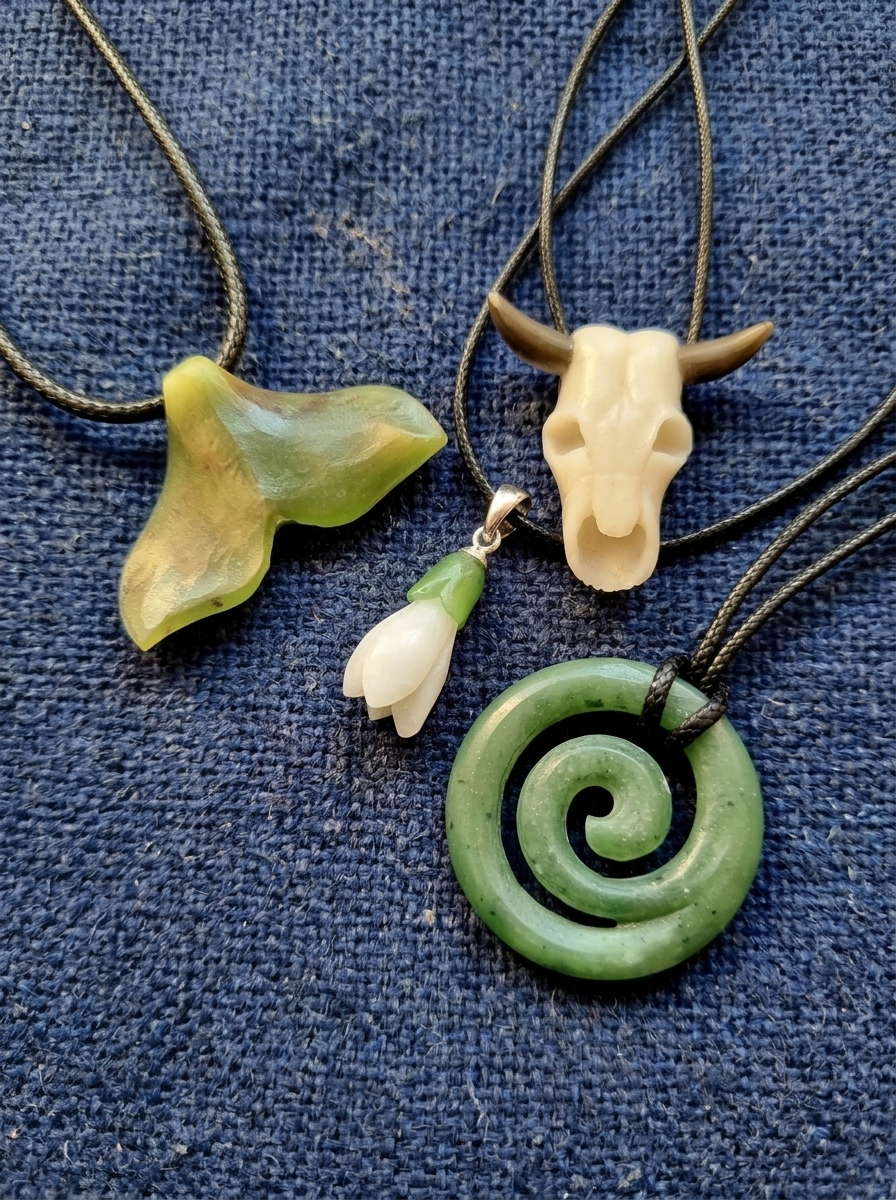
The Craft of Carving Nephrite Armbands: A Master’s Touch
Carving a nephrite jade armband is a testament to patience, skill, and an intimate understanding of the stone. Unlike softer materials that can be sculpted with sharp tools, nephrite’s extreme toughness necessitates an abrasive carving process. Traditional methods involve using hard natural abrasives like quartz or garnet sand, often mixed with water into a slurry, applied to a rotating tool. Modern lapidary artists utilize diamond-impregnated tools and wheels, but the principle remains the same: gradually grinding away material, not cutting it.
A critical trade secret in carving nephrite is understanding the orientation of its interlocking fibers. While the stone is tough in all directions, certain cuts and intricate details require a master carver to “read” the grain, much like a woodworker. Incorrect force or direction can lead to chipping or undesirable textural variations, despite the stone’s overall resilience. The slow, meticulous nature of the process ensures the stone’s structural integrity is maintained, resulting in pieces that are not only beautiful but also remarkably robust. Achieving a perfectly smooth, polished surface on a nephrite armband involves a multi-stage process of progressively finer abrasives, culminating in a high-shine finish that highlights the stone’s inherent glow.
Authenticity and Identification: A Gemologist’s Perspective
Given nephrite’s value and historical significance, distinguishing authentic nephrite from simulants is crucial. A skilled gemologist employs various tests to ascertain a stone’s identity. While nephrite (a calcium magnesium iron silicate) is one of the two mineral species commonly referred to as “jade” (the other being jadeite, a sodium aluminum silicate), it possesses distinct properties.
Key identifiers include:
- Specific Gravity (SG): Nephrite typically ranges from 2.90 to 3.03, while jadeite is higher, 3.30 to 3.38. This is a primary differentiator.
- Refractive Index (RI): Nephrite has a lower RI (1.606-1.632) compared to jadeite (1.654-1.667).
- Macroscopic Appearance: Nephrite often exhibits a slightly greasy or waxy luster, and its internal structure, even without magnification, can sometimes hint at its fibrous nature.
- Sound Test: A trade secret often employed by experienced collectors is the “ring test.” When gently tapped with another piece of nephrite or a hard, non-marring object, genuine nephrite produces a distinctive, resonant “thud” or deep, sonorous “clink,” unlike the dull sound of serpentine or the sharp ring of glass.
Common simulants include serpentine (e.g., Bowenite), hydrogrossular garnet, dyed quartz, and glass. These lack the characteristic toughness and specific optical properties of true nephrite. Always seek reputable sources and, for high-value pieces, request independent gemological certification to ensure authenticity.
Conclusion
Nephrite jade armbands are more than just exquisite jewelry; they are miniature monuments to geological endurance and human artistry. Their legendary toughness, born from an extraordinary interlocking fibrous structure, ensures they withstand the rigors of time and wear, making them true heirloom pieces. From their deep cultural roots as symbols of protection and longevity to the meticulous craftsmanship required to shape them, these armbands embody an unbreakable elegance. Owning a nephrite jade armband is to possess a piece of Earth’s enduring strength, a silent testament to beauty that truly lasts forever.
Frequently Asked Questions
Q1: What makes nephrite jade so tough compared to other gemstones?
Nephrite’s extreme toughness comes from its unique microscopic structure: it’s a dense aggregate of millions of tightly interwoven, elongated mineral fibers (tremolite-actinolite). This interlocking “felted” texture prevents cracks from propagating easily, making it incredibly resistant to breaking, chipping, and shattering, unlike stones with crystalline structures that have distinct cleavage planes.
Q2: How can I tell if a nephrite jade armband is genuine?
Authenticating nephrite involves several tests: checking its specific gravity (density), refractive index, and observing its characteristic greasy to waxy luster. A seasoned expert might also perform a “ring test” (listening for a specific resonant thud) or examine its fibrous internal structure under magnification. For definitive assurance, always seek a reputable seller and request gemological certification.
Q3: Is nephrite jade harder or tougher than jadeite jade?
Nephrite and jadeite have similar hardness (6-6.5 on the Mohs scale for nephrite, 6.5-7 for jadeite), meaning they are similarly resistant to scratching. However, nephrite is generally considered significantly *tougher* than jadeite. Its superior interlocking fibrous structure gives it greater resistance to fracture and breakage, making it exceptionally durable for items like armbands that endure daily wear.