

The Blue Giant of the Orient: Unveiling Earth’s Largest Faceted Blue Sapphire
In the pantheon of celebrated gemstones, few command the awe and reverence reserved for “The Blue Giant of the Orient.” This extraordinary blue sapphire, weighing an astounding 486.52 carats, stands as the largest faceted blue sapphire in the world, a true marvel of nature’s artistry and a testament to the Earth’s geological treasures. Its very name evokes images of exotic lands and profound depths, promising a narrative rich in gemological intrigue and historical significance. Beyond its staggering size, this sapphire embodies a rare confluence of perfect color, exceptional clarity, and meticulous craftsmanship, making it not merely a gem, but a legendary artifact.
A Legacy Forged in Corundum: The Blue Giant’s Gemological Profile
To truly appreciate the “Blue Giant,” one must delve into its fundamental gemological identity. As a member of the corundum family (aluminum oxide, Al₂O₃), sapphire shares its chemical composition with ruby, differing only in the trace elements responsible for its vibrant hue. Corundum crystals belong to the trigonal system, often forming barrel-shaped, hexagonal prisms, or bipyramidal habits in their natural state. However, the sheer size of the rough material required to yield a 486.52-carat faceted stone suggests an exceptionally rare, well-formed crystal free of major structural defects.
The captivating blue color of the “Blue Giant” is primarily attributed to the presence of minute amounts of iron (Fe²⁺) and titanium (Ti⁴⁺) through intervalence charge transfer, a phenomenon where electrons hop between these adjacent ions within the crystal lattice, selectively absorbing red and yellow light and allowing blue light to pass through. The saturation and evenness of this blue are paramount to its value, and for a stone of this magnitude, the distribution must be flawless. Gemologists meticulously assess this with tools like the GIA’s “vivid” or “royal blue” descriptors, which likely apply to the “Blue Giant.”
Technical Nuances of a Masterpiece:
- Refractive Index (RI): Sapphires exhibit a distinct refractive index range of 1.762-1.770, with a birefringence of 0.008-0.009. This optical property gives sapphires their characteristic brilliance and fire. For a stone of this scale, precise cutting maximizes light return through the crown, ensuring every facet contributes to its scintillating appearance.
- Specific Gravity (SG): Ranging from 3.99 to 4.01, the specific gravity aids in identification and distinguishes sapphire from other blue gems like iolite or tanzanite. The weight of the “Blue Giant” is a direct correlation to its volume and density, affirming its genuine sapphire identity.
- Hardness: With a Mohs hardness of 9, sapphire is second only to diamond, making it an incredibly durable gemstone suitable for heirloom jewelry. This hardness also allows for the intricate faceting seen in the “Blue Giant” without fear of surface scratches.
- Pleochroism: Sapphire is typically dichroic, meaning it displays two distinct colors when viewed from different crystallographic directions. In blue sapphires, this can manifest as blue and greenish-blue or blue and violet-blue. A skilled cutter must orient the rough stone to minimize the less desirable color component and maximize the primary blue hue, a critical decision in a stone of the “Blue Giant’s” caliber.
- Inclusion Analysis (E-E-A-T Factor): For expert gemologists, inclusions are the “fingerprints” of a gemstone, revealing its origin and treatment history. Common inclusions in natural blue sapphires include fine rutile needles (silk), hexagonal growth zoning, zircon crystals with halo fractures, and feathery “fingerprint” patterns. For a stone of such historical significance and value, the absence of any signs of heat treatment is crucial. Experts examine sapphires under magnification for tell-tale signs of heat alteration:
- Melted or altered rutile needles: Natural, sharp rutile needles become rounded or dissolve when heated.
- Gas bubbles: Spherical or worm-like bubbles trapped in fractures during flux healing or high-temperature heating.
- “Snowball” effect: Milky, cloud-like zones caused by altered inclusions from heat.
- Healed fractures: Microscopic fractures filled with flux, showing iridescent film or flow lines.
Given the “Blue Giant’s” legendary status, it is almost certainly untreated, a factor that exponentially increases its value and rarity.
The Journey of a Monarch: From Mine to Masterpiece
While the exact provenance of the “Blue Giant” is a closely guarded secret, the world’s finest blue sapphires traditionally hail from Sri Lanka (Ceylon), Kashmir, and Myanmar (Burma). Sri Lanka, renowned for its large, fine-quality blue sapphires unearthed from ancient alluvial deposits, is a strong candidate for its origin. Imagine a rough crystal, weighing well over 1000 carats, unearthed from ancient gravels by a seasoned miner, its dull exterior belying the vibrant blue within.
The transformation from rough crystal to a perfectly faceted 486.52-carat gem is an arduous process demanding unparalleled skill. Cleavage planes in corundum necessitate extreme caution, and even a slight miscalculation during cutting could result in catastrophic loss of material or irreversible damage. The master cutter, likely working for months or even years, would have meticulously studied the rough, identifying optical axes, growth patterns, and inclusions to determine the optimal orientation and facet arrangement. The “Blue Giant” is believed to be cut in a cushion shape, a popular choice for large, colored gemstones as it retains maximum weight while enhancing color saturation and brilliance.
Unparalleled Value: Beyond Carat Weight
The value of the “Blue Giant of the Orient” transcends its colossal carat weight. It is a confluence of several factors:
- Rarity: Untreated, natural blue sapphires of this size and quality are astronomically rare, forming perhaps once in a millennium.
- Color and Clarity: A consistent, vivid blue with minimal inclusions visible to the naked eye, a feat for a stone of this scale.
- Provenance: While its ownership history is not widely publicized, such a gem would invariably have passed through the hands of royalty, influential collectors, or renowned institutions, adding immeasurable historical and cultural value.
- Uniqueness: As the largest faceted blue sapphire, it is a singular entity, a benchmark against which all other sapphires are measured.
The Stone-Flower Legacy in Precious Gems
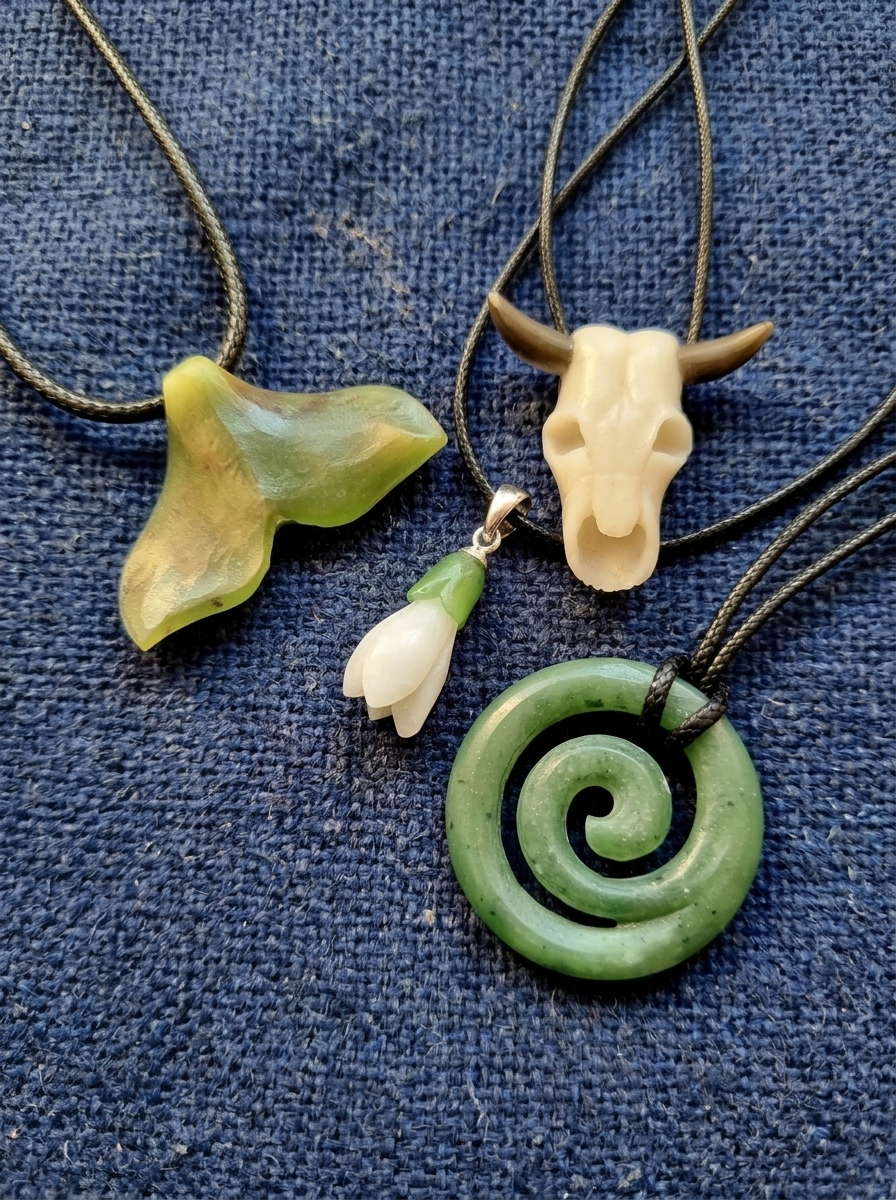
At stone-flower.com, our appreciation for extraordinary gemstones like the “Blue Giant of the Orient” fuels our passion for bringing the finest natural creations to discerning collectors. While the “Blue Giant” is a one-of-a-kind marvel, our expertise lies in understanding the geological marvels that make such stones possible, from the trace elements that create color to the intricate crystal structures that define their beauty. We apply this deep gemological knowledge to curate an exquisite collection of natural gemstones and meticulously hand-carved pieces, ensuring authenticity, quality, and an understanding of the unique story each gem tells. Our commitment to the craft echoes the dedication required to transform a rough sapphire into a legendary masterpiece.
FAQ: Delving Deeper into Sapphire Grandeur
Q1: Is the Blue Giant of the Orient treated to enhance its color?
A1: While many sapphires on the market undergo heat treatment to improve their color and clarity, a gem of the “Blue Giant’s” historical significance and unparalleled size is almost certainly untreated. Expert gemological examination for a stone of this magnitude would confirm the absence of heat-induced inclusions or other alterations, a factor that profoundly contributes to its rarity and value.
Q2: What makes a blue sapphire truly valuable beyond its size?
A2: Beyond sheer carat weight, the value of a blue sapphire is determined by several critical factors:
- Color: The most important factor. A vivid, saturated blue (often termed “royal blue” or “cornflower blue”) with excellent distribution and no undesirable secondary hues.
- Clarity: Minimal inclusions that do not detract from the gem’s beauty or transparency, especially important in large stones.
- Cut: A masterfully executed cut that maximizes brilliance, color, and symmetry while preserving weight.
- Origin: Sapphires from historically significant mines like Kashmir or Sri Lanka often command premium prices due to their reputation for exceptional quality.
- Lack of Treatment: Untreated sapphires are significantly rarer and more valuable than their treated counterparts.
Q3: How does the “Blue Giant” compare to other famous sapphires in the world?
A3: The “Blue Giant of the Orient” stands in a league of its own as the largest faceted blue sapphire globally. While other famous sapphires like the “Star of India” (563.35 ct, but a star sapphire cabochon) or the “Logan Sapphire” (423 ct, faceted) are incredibly significant, none surpass the “Blue Giant’s” combination of faceted cut and pure blue sapphire weight. It remains a singular achievement in the realm of precious gemstones.