

Unveiling Dragon Eye Turquoise: The Apex of Spiderweb Artistry
In the vast realm of gemstones, few captivate the imagination quite like turquoise. Revered across millennia for its celestial blue-green hues, turquoise stands as a testament to Earth’s artistic prowess. Within this coveted mineral, a select few achieve legendary status. Among them, the Dragon Eye Turquoise reigns supreme, celebrated as the highest grade of spiderweb turquoise, distinguished by its perfectly symmetrical matrix. This isn’t merely a descriptive term; it denotes a pinnacle of natural beauty and geological rarity, making it a true treasure for collectors and connoisseurs alike.
The Gemological Imperative: Defining Dragon Eye’s Purity
To truly appreciate Dragon Eye Turquoise, one must first understand the fundamental gemological properties that underpin all turquoise. Turquoise is a hydrous phosphate of copper and aluminum, with the chemical formula CuAl6(PO4)4(OH)8·4H2O. Its characteristic color stems from the presence of cupric ions; iron inclusions introduce green tones, while zinc contributes to yellowish hues. True Dragon Eye Turquoise exhibits a vibrant, stable blue to blue-green body color, signifying a balanced mineral composition and minimal undesirable impurities.
- Hardness: Typically ranging from 5 to 6 on the Mohs scale, natural, untreated turquoise can be susceptible to scratches and abrasion. However, the density and consistent mineralization of high-grade specimens contribute to superior polish retention.
- Specific Gravity: Between 2.60 and 2.80, a crucial identifier for distinguishing natural turquoise from simulants.
- Refractive Index: Exhibits an aggregate refractive index of approximately 1.610-1.650, owing to its cryptocrystalline structure. These precise measurements are vital for expert gemologists to confirm authenticity, especially when dealing with high-value pieces like Dragon Eye.
What sets Dragon Eye apart is not just its base composition, but the exquisite interplay between the pure turquoise and its host rock, forming the iconic matrix.
Decoding the Matrix: The Art of the Spiderweb
The “spiderweb” matrix in turquoise refers to a network of fine, dark lines that crisscross the stone’s surface, resembling a delicate web. This matrix is composed of remnants of the original host rock—typically limonite, iron oxide, chert, or sandstone—that permeated the turquoise veins as they formed within the earth. For most spiderweb turquoise, these patterns are beautiful but irregular. For Dragon Eye, the expectation is vastly different.
The “Dragon Eye” Distinction: Symmetry, Fineness, and Contrast
The term Dragon Eye Turquoise is reserved for an exceedingly rare subset of spiderweb turquoise where the matrix lines are not merely present but are perfectly symmetrical, creating a visually balanced and often concentric pattern. Imagine the intricate scales of a mythical creature, or the mesmerizing patterns of a kaleidoscope—this is the caliber of precision demanded. The lines must be:
- Finely delineated: The matrix should consist of thin, razor-sharp lines, not thick, blobby inclusions.
- High contrast: A stark visual distinction between the rich blue turquoise and the dark, often jet-black or deep brown matrix lines.
- Even distribution: The pattern should flow harmoniously across the entire surface of the cabochon, without large unblemished areas or disruptive clusters.
- Absence of pitting: High-grade Dragon Eye will be largely free of surface pits or voids within the matrix lines, indicating superior density and careful extraction.
Geologically, this perfection arises from a confluence of highly specific mineralizing conditions within the host rock. The turquoise forms in narrow fissures and veins, and when these veins are subsequently infiltrated by iron-rich solutions or other mineral intrusions in a highly uniform manner, such exquisite patterns can emerge. Mines renowned for producing high-quality spiderweb turquoise, such as certain pockets within the Bisbee, Lander Blue, and Old Kingman deposits, are the rare sources where one might, with extreme fortune, discover specimens worthy of the “Dragon Eye” appellation. It is crucial to understand that “Dragon Eye” is a grade and aesthetic descriptor, not a mine designation, representing the absolute pinnacle of spiderweb quality from any given source.
The Pinnacle of Perfection: What Elevates “Dragon Eye” Above “Spiderweb”?
While all Dragon Eye is spiderweb turquoise, not all spiderweb is Dragon Eye. The distinction lies in a rigorous set of grading criteria understood only by the most experienced gemologists and collectors. This pursuit of perfection is what drives its astronomical value and rarity.
Strict Grading Criteria for Dragon Eye
- Impeccable Symmetry: This is the hallmark. The matrix lines must form a cohesive, balanced, and often radial or concentric pattern that appears intentionally designed. Random, scattered lines, however beautiful, do not qualify.
- Exceptional Color Saturation: The turquoise body color must be consistently vibrant, typically a deep robin’s egg blue or a rich greenish-blue, without mottling or pale spots.
- Flawless Matrix Definition: The lines themselves should be uniform in width and intensity, forming a delicate, interconnected web across the stone’s surface.
- Superior Luster and Polish: The stone must accept and retain an exceptional polish, allowing the intricate matrix to stand out with striking clarity and depth. Any surface imperfections, especially those that disrupt the pattern, significantly diminish its value.
- Minimal Inclusions (Outside the Matrix): Beyond the perfectly integrated matrix, there should be virtually no other unsightly inclusions or host rock remnants.
Achieving this grade requires not only the miraculous hand of nature but also the discerning eye and skilled hand of a master lapidary. The cutter must orient the rough stone precisely to maximize the symmetrical matrix pattern, sacrificing weight for aesthetic perfection—a trade secret that often goes unseen by the casual observer.
The Craft of Connoisseurs: Sourcing and Authenticity
Given its exceptional rarity and value, Dragon Eye Turquoise is a prime target for misrepresentation and treatment. Authentic, natural Dragon Eye specimens are exceedingly scarce, often commanding prices far exceeding other high-grade turquoise.
When seeking such an investment, it is paramount to source from reputable dealers with verifiable gemological expertise. These experts understand the nuances that differentiate natural, untreated material from stabilized, dyed, or composite stones. While stabilization (impregnating porous turquoise with resin to enhance durability and color) is common and accepted for many grades of turquoise, a true Dragon Eye is almost never treated beyond simple polishing. Any treatment would devalue such a rare natural wonder significantly.
Trade secrets for discerning authenticity include scrutinizing the luster, which often appears unnaturally plastic-like in stabilized material. Magnification will reveal dye concentrations in cracks or pits, and in highly treated specimens, even a slightly altered specific gravity. Reputable vendors, like stone-flower.com, prioritize transparency and provide comprehensive gemological information, ensuring buyers receive genuine, high-quality treasures.
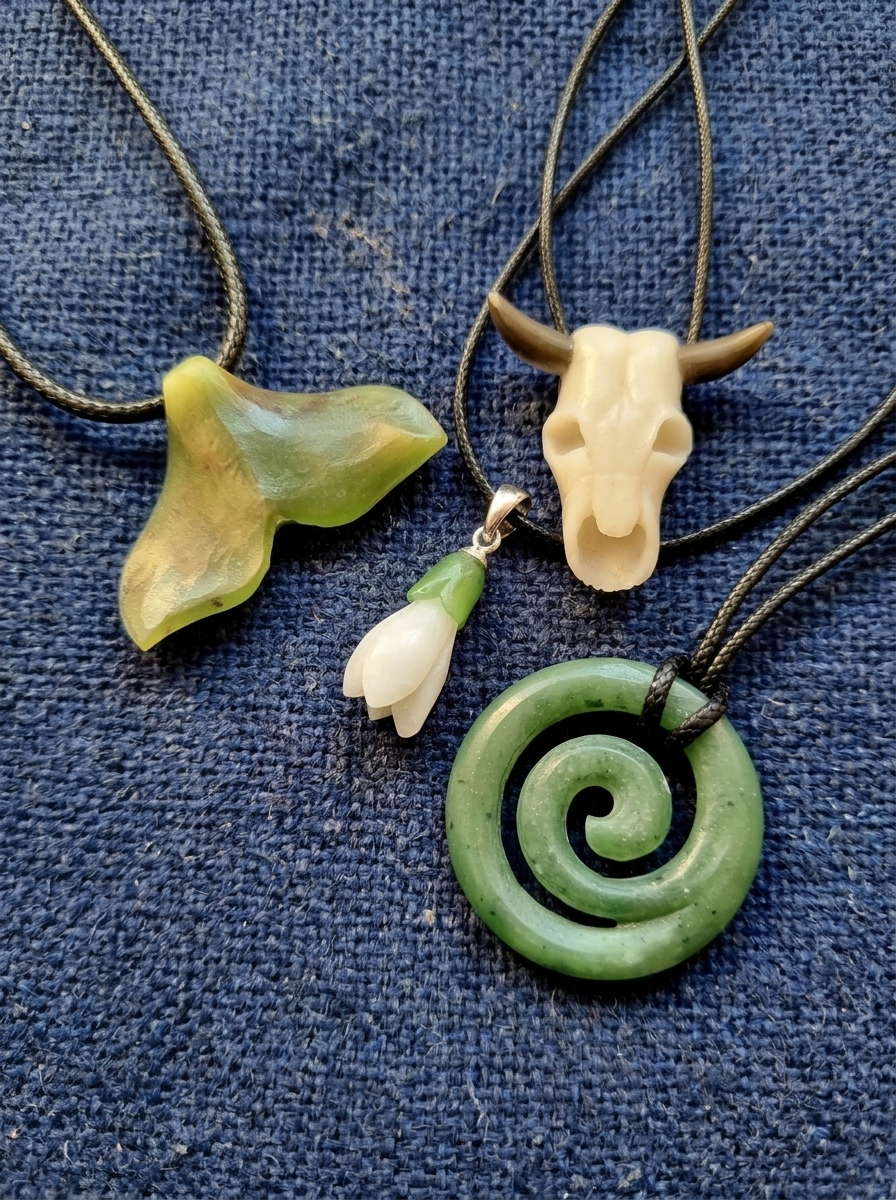
While our focus today is on turquoise, the artistry exemplified in pieces like these hand-carved nephrite jade pendants from stone-flower.com showcases the meticulous craftsmanship required for exceptional lapidary. This same dedication to quality and natural beauty is what discerning collectors seek in top-tier turquoise.
Value, Rarity, and Investment
The value of Dragon Eye Turquoise is driven by its extreme rarity, impeccable aesthetics, and consistent demand from serious collectors. It is not merely a piece of jewelry; it is a geological masterpiece and a sound investment. Factors influencing its price include:
- Size: Larger cabochons with perfect symmetry are exponentially more valuable.
- Color Purity: A vivid, stable blue with minimal green undertones is often preferred.
- Matrix Perfection: The absolute symmetry and fineness of the spiderweb pattern.
- Provenance: While Dragon Eye is a grade, knowing its general geological origin from a reputable mine adds to its desirability.
Due to the depletion of many historical turquoise mines and the incredibly low yield of such perfect specimens, Dragon Eye Turquoise continues to appreciate in value, making it a prized possession and a significant asset for any serious gem collection.
FAQ about Dragon Eye Turquoise
Q1: What distinguishes Dragon Eye Turquoise from other spiderweb varieties?
The primary distinction is the perfect symmetry and exquisite balance of its matrix pattern. While all spiderweb turquoise features a network of fine lines, Dragon Eye demands these lines to be incredibly fine, highly contrasting, and arranged in a visually harmonious, often concentric or radial design across the entire stone. It signifies an unmatched level of geological precision and aesthetic perfection that sets it apart from more common, albeit still beautiful, irregular spiderweb patterns.
Q2: How can I verify the authenticity and quality of Dragon Eye Turquoise?
Verifying authenticity requires a combination of factors. First, always purchase from highly reputable, specialized gem dealers or established online platforms like stone-flower.com that offer detailed descriptions and return policies. Look for natural, untreated stones with vibrant, stable color and a distinct, symmetrical matrix under magnification. A certified gemological report from an independent laboratory (e.g., GIA, AGS) is the ultimate assurance for high-value pieces, confirming the material is natural turquoise and identifying any treatments. Be wary of prices that seem too low for such a rare grade.
Q3: What is the typical value range for Dragon Eye Turquoise?
Due to its extreme rarity and high demand, Dragon Eye Turquoise commands premium prices. While general spiderweb turquoise can range from tens to hundreds of dollars per carat, true Dragon Eye can easily fetch thousands to tens of thousands of dollars per carat for exceptional specimens, especially for larger, perfectly symmetrical cabochons. The exact value depends on size, color, matrix perfection, and overall aesthetic appeal. It represents a significant investment, often compared to other rare collector’s gems.
The Dragon Eye Turquoise is more than just a stone; it is a geological marvel, a testament to nature’s capacity for intricate design, and a symbol of exquisite rarity. For those who understand its profound beauty and intricate formation, it represents the absolute zenith of turquoise artistry.