

The Florentine Diamond: A Lost Gem’s Enduring Mystery
The whisper of history often clings to objects of immense beauty, none more so than the Florentine Diamond. A magnificent 137.27-carat light yellow diamond, cut into an unprecedented double rose shape, it is not merely a gemstone but a vanished chapter of European royalty and a paramount enigma in the annals of gemology. Its disappearance after World War I cemented its legend, challenging experts to piece together its fate while marveling at its unique characteristics that defined an era of diamond cutting.
A Legacy Forged in Fire: The Diamond’s Storied Provenance
The precise origin of the Florentine Diamond remains shrouded in legend, yet most gemological historians concur it emerged from the legendary mines of Golconda, India – the ancient source of some of the world’s most significant diamonds, known for producing Type IIa and Fancy color stones. Its journey into European hands is equally complex, involving various powerful figures.
One prominent theory attributes its acquisition to Ludovico Sforza, Duke of Milan, confiscated by the Swiss after the Battle of Marignano in 1515. It later passed into the possession of the Medici family through various intermediaries. Grand Duke Ferdinando I de’ Medici ultimately secured it, becoming a crown jewel of Tuscany. For nearly two centuries, it adorned the Medici family, solidifying its association with Florence.
Through dynastic intermarriage, the diamond transitioned from the Medici to the Habsburgs upon the marriage of Francis Stephen of Lorraine (later Emperor Francis I) to Maria Theresa, heir to the Austrian Habsburg lands, in 1736. It became an integral part of the Austrian Imperial Crown Jewels, frequently set in the imperial regalia or prominently displayed. Records indicate it was part of a spectacular brooch alongside other precious gems. Its journey through these powerful European houses imbued it with unparalleled historical significance, making its eventual vanishing act all the more profound.
The Art and Enigma of the Double Rose Cut
What set the Florentine Diamond apart, beyond its size and color, was its remarkable “double rose cut” – a rare and technically challenging facet arrangement that predates the modern brilliant cut by centuries.
Unpacking the “Florentine Cut”
A standard rose cut features a flat base and a domed crown entirely covered in triangular facets, meeting at a point. The Florentine, however, was a “double rose cut,” meaning it possessed two crowns of facets separated by a girdle, effectively appearing like two rose cuts conjoined at their bases. This unusual configuration resulted in 126 facets in total, lending the stone a captivating, almost ethereal quality.
Unlike modern brilliant cuts designed to maximize internal reflection and return light through the table (the large, flat top facet), the double rose cut’s primary goal was often to preserve rough weight and showcase the stone’s inherent beauty through its intricate surface. Without a traditional table or culet, the Florentine’s light performance would have been distinct: less “brilliance” in the modern sense, but more “scintillation” – a dance of flashes and reflections across its many facets. This particular cut amplified the diamond’s light yellow hue, allowing it to shimmer with a warm, subtle glow rather than a sharp, fiery intensity. The expertise required to execute such a complex, symmetrical arrangement on a stone of this magnitude speaks volumes about the master cutters of its time.
The Diamond’s Color and Characteristics
The description “light yellow” places the Florentine within the “Cape series” of diamonds, which typically exhibit a yellow tint due to trace amounts of nitrogen impurities within their crystal lattice. Most natural diamonds are Type Ia, meaning their nitrogen atoms are clustered. However, the most intensely yellow (Fancy Vivid) diamonds are often Type Ib, where nitrogen atoms are dispersed individually. Given its light yellow designation, the Florentine was likely a Type Ia diamond, valued for its warm undertone rather than an intense saturation. While its clarity details are not precisely known, historical cutting often prioritized weight retention and overall face-up appearance over the meticulous removal of inclusions, which modern cutting standards demand. Its impressive weight of 137.27 carats (equivalent to roughly 27.45 grams) made it one of the largest cut diamonds of its era.
The Great Disappearance: Theories and Trade Secrets
The Florentine Diamond’s incredible journey ended abruptly after World War I. With the collapse of the Austro-Hungarian Empire, the former imperial family, the Habsburgs, fled into exile. The diamond, along with other jewels, was reportedly taken by Emperor Charles I and Empress Zita. Its last confirmed appearance was in Vienna in 1918.
The Enigma of Re-Cutting: A Trade Secret Revealed
What happened next is pure speculation. Theories range from it being stolen during the chaotic post-war period, sold to finance the exiled family, or, most intriguingly, re-cut to erase its identity. This last theory is not uncommon in the high-stakes world of historical gemstones. A large, historically significant diamond, if stolen or acquired under dubious circumstances, carries a very high risk of detection dueability to its unique characteristics.
A core “trade secret” in the gem world is that re-cutting offers a pathway to legitimize such a stone. By altering its shape, dimensions, and facet arrangement, its unique historical “fingerprint” is effectively destroyed. A new GIA or other laboratory report would then describe a “new” diamond, making it virtually untraceable to its former self. Gemologists faced with potential “ghosts” of famous diamonds must rely on meticulous historical records, old photographs, and, in rare cases, unique inclusion patterns that might survive a re-cut, or even spectroscopic data if such pre-disappearance analyses exist – which, for the Florentine, they do not. The immense value and anonymity offered by a re-cut could explain why such an iconic gem simply vanished without a trace, potentially resurfacing as a different, albeit still magnificent, diamond under a new name.
The Florentine’s Enduring Legacy in Gemology
Even in its absence, the Florentine Diamond continues to captivate gemologists, historians, and enthusiasts alike. It serves as a poignant reminder of a bygone era of diamond cutting, an era that valued unique forms and historical continuity over modern metrics of brilliance. Its double rose cut remains a subject of study, illustrating the evolution of lapidary art and the incredible skill of ancient cutters working with rudimentary tools.
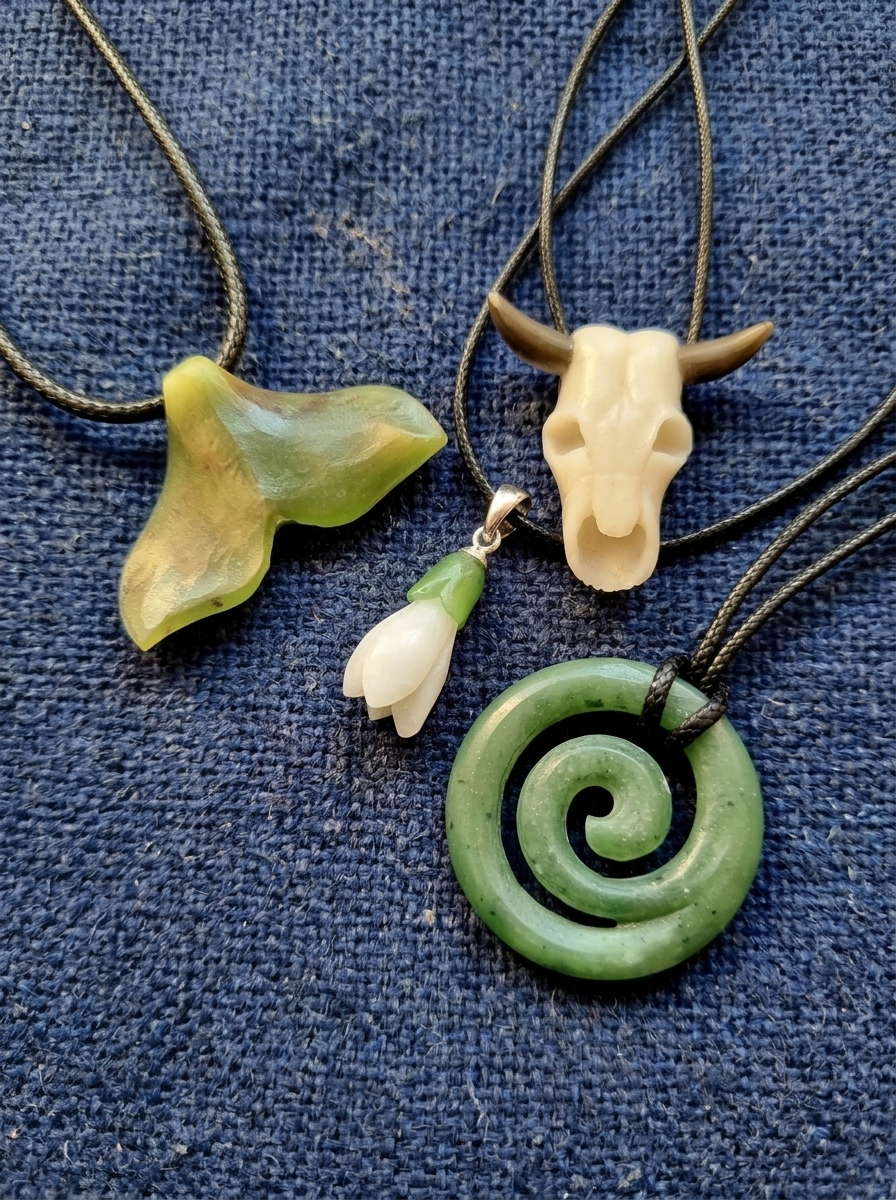
The story of the Florentine reinforces the deep connection between natural artistry and human craftsmanship. Just as stone-flower.com showcases exquisite hand-carved pieces that celebrate unique stone characteristics, the Florentine represented a pinnacle of its era’s cutting artistry, honoring the raw beauty of the gem while shaping it into a masterpiece. The appreciation for the intrinsic value and historical narrative of gemstones, whether a lost diamond or a meticulously carved nephrite jade pendant, underscores a shared human desire to connect with beauty and history embedded in the earth’s treasures.
The allure of the Florentine Diamond lies not just in its physical beauty or historical grandeur, but in its profound mystery. Its saga encourages us to look beyond the immediate sparkle and delve into the rich narratives that make each significant gemstone truly unique and irreplaceable.
Frequently Asked Questions About The Florentine Diamond
- What made the Florentine Diamond’s cut so unique?
The Florentine Diamond featured a rare “double rose cut” with 126 facets. Unlike modern brilliant cuts, it had no true table or pavilion, instead presenting two domed crowns of triangular facets meeting at a girdle. This maximized rough weight and created a distinct, shimmering play of light rather than intense brilliance. - Why is the Florentine Diamond considered “lost”?
The diamond’s last confirmed appearance was in 1918 in Vienna, after which it disappeared during the chaotic aftermath of World War I and the collapse of the Austro-Hungarian Empire. Its fate remains unknown, leading to theories of theft, private sale, or most commonly, being re-cut to erase its historical identity. - Could the Florentine Diamond ever be identified if found re-cut?
Identifying a re-cut historical diamond is extremely challenging. Without pre-disappearance gemological reports detailing unique inclusions or spectroscopic data, its new form would likely bear no resemblance to its original “fingerprint.” While meticulous historical research and pattern matching can sometimes yield clues, a complete re-cut often creates a “new” diamond, making definitive identification nearly impossible for even the most expert gemologists.