

The Peacock Throne Emeralds: Unveiling Mughal Gemology
Few artifacts in the history of mineralogy command the same reverence as the emeralds that once adorned the Peacock Throne. Commissioned by Shah Jahan in the 17th century, the throne served as a kaleidoscopic monument to Mughal opulence, encrusted with stones that represent the apex of Colombian emerald provenance. For the serious collector and connoisseur, exploring these stones is more than an exercise in history—it is a masterclass in high-carat, untreated, and chemically pristine beryl.
The Provenance of Mughal-Era Colombian Emeralds
The emeralds that graced the Peacock Throne were exclusively sourced from the Muzo and Chivor mines of Colombia. During the 16th and 17th centuries, the Spanish trade routes funneled these gems through the Ottoman Empire into the Mughal court. Unlike modern emeralds, which are frequently subject to resin-based fissure filling, these historic stones were valued for their “natural integrity.”
From a gemological perspective, the Mughal preference was distinctly for “old mine” characteristics. These stones exhibited:
- Superior Saturation: High concentrations of chromium and vanadium relative to iron, resulting in that iconic, deep, “grass-green” hue that defies the muted tones often found in African emeralds.
- Distinctive Inclusion Suites: Mughal lapidaries did not shy away from the jardin (the internal botanical-like inclusions). In fact, the presence of three-phase inclusions—consisting of a liquid, a gas bubble, and a jagged halite crystal—was viewed as a hallmark of geographic authenticity, confirming the Colombian origin of the beryl.
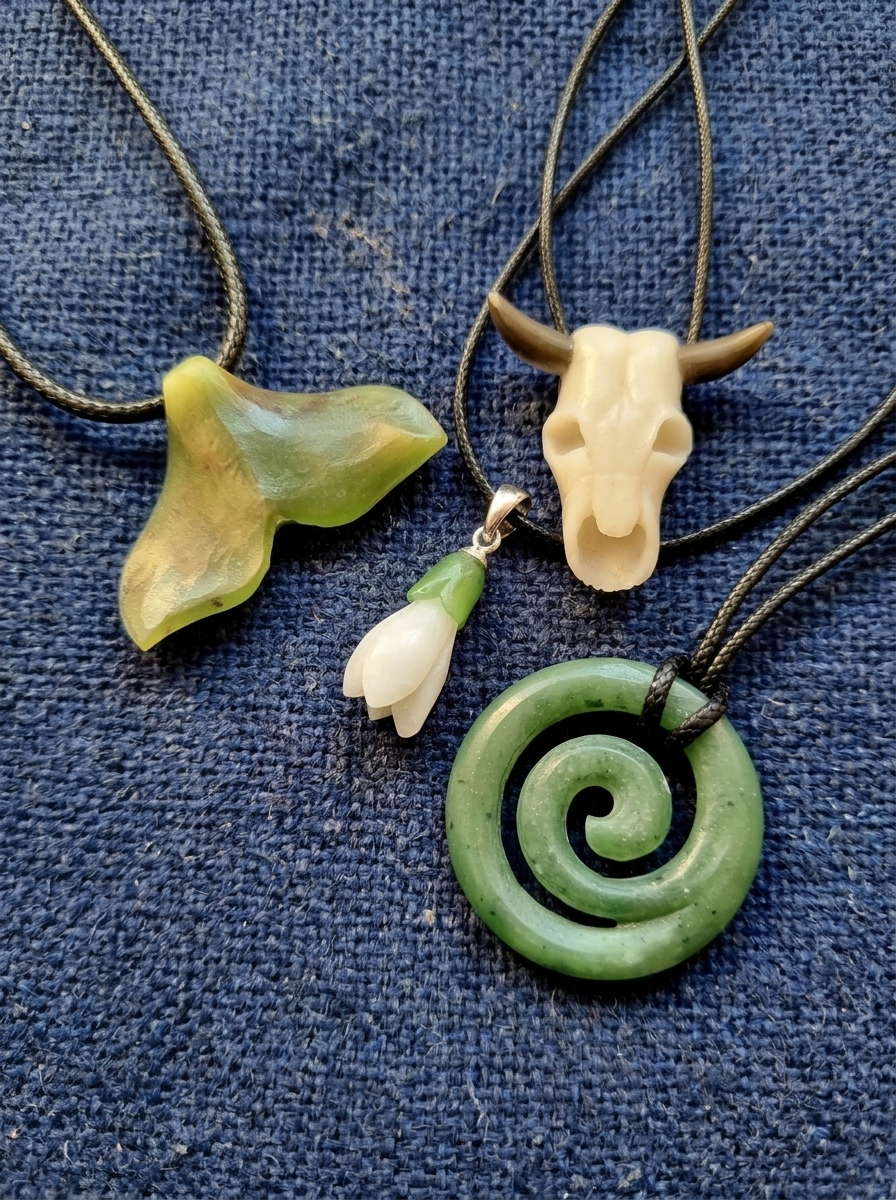
At stone-flower.com, we recognize that the appreciation of high-quality nephrite and emerald-grade beryl follows the same principles of respecting natural formation and historical carving techniques.
The Technical Geometry of Mughal Lapidary
The lapidary work applied to the Peacock Throne emeralds differed drastically from contemporary faceting. Mughal court jewelers prioritized weight retention over light return. Instead of the precision-cut, mathematically symmetrical brilliant cuts we see today, these stones were often cabochon-cut or featured a “flat-table” style. This was done to maximize the surface area for intricate calligraphy and floral motifs.
When analyzing these historic stones, gemologists look for two specific technical markers:
1. Micro-Carving and Relief
Because Colombian emeralds possess a hardness of 7.5 to 8 on the Mohs scale, they are notoriously brittle due to their inherent fractures. Mughal artisans mastered the art of “relief carving,” using diamond-tipped drills to etch verses from the Quran or floral patterns directly into the emerald face without causing catastrophic cleavage. This required an intimate knowledge of the stone’s crystalline axes.
2. The “Oil” Factor
Modern gemology is obsessed with clarity enhancement. However, the Peacock Throne emeralds remained largely free of synthetic resins. If oiling occurred during the 17th century, it was strictly traditional cedarwood oil, which possesses a refractive index (RI) close to that of beryl (~1.57–1.58). This subtly masks surface-reaching fractures without obscuring the natural mineral signature of the stone.
Geological Significance and Trade Secrets
The Peacock Throne represents the largest recorded assembly of “trapiche” or near-trapiche emeralds. While the term trapiche is often associated with the distinct six-rayed star pattern of carbonaceous material, the Mughal collection contained variations where the crystallization was so dense that the stones displayed an almost “velvet” texture.
Trading secrets of the era dictated that the stones be kept in silk pouches and regularly exposed to specific humidity levels. This prevented the emeralds from “drying out”—a phenomenon where dehydration of the included water molecules within the beryl lattice can lead to structural weakness in ancient, exposed stones. Even today, museums housing remnants of the Peacock Throne maintain climate-controlled vitrines that mimic these ancient protective protocols.
Frequently Asked Questions (FAQ)
What defines an “Old Mine” Colombian emerald?
An “Old Mine” classification refers to emeralds extracted from Muzo or Chivor before modern mass-extraction techniques. They are prized for their saturated, vivid green color, which is derived from a high chromium-to-iron ratio, and their high degree of natural inclusion—or “garden”—which proves the stone has not been subjected to modern heat-treatment or synthetic diffusion.
Why are Mughal-era emeralds carved rather than faceted?
Mughal lapidary tradition prioritized the stone as a canvas for artistic expression. Carving allowed the emperor to imbue the gemstone with spiritual or historical significance. Furthermore, because emeralds are type-III clarity stones, faceting often reveals internal fractures; carving techniques were utilized to “hide” these structural weaknesses within the lines of the relief design.
How do we authenticate a historic emerald from this period?
Authentication requires advanced spectroscopic analysis (EDXRF or FTIR). Gemologists look for the absence of modern synthetic polymers, the presence of specific trace elements like vanadium, and the characteristic three-phase inclusions (fluid, gas, and salt crystal) that are unique to the hydrothermal conditions of the Colombian Andes.
The legacy of the Peacock Throne remains the ultimate benchmark for emerald quality. Whether one is sourcing modern, artisanal pieces or studying the mineralogical giants of the past, the core principles of color, clarity, and structural integrity remain unchanged. Discover more about the artistry of natural stones at stone-flower.com.