

Wulfenite: The Fragile Lead Molybdate With Perfect Square Crystals
Few minerals stop experienced collectors in their tracks like wulfenite. Its razor-thin square crystals appear almost artificial—bright orange, red, or honey-yellow plates balanced delicately on oxidized rock matrices. Yet beneath this spectacular geometry lies one of the most fragile and technically challenging collector minerals in gemology and mineral preservation.
Wulfenite is prized not only for its intense color and iconic crystal habit, but also because fine specimens are extraordinarily vulnerable to damage. Even experienced mineral handlers can destroy a world-class crystal with improper lighting, vibration, cleaning, or storage conditions.
For mineralogists, lapidaries, and elite collectors, wulfenite represents the intersection of crystallography, oxidation-zone geochemistry, and advanced specimen conservation.
What Is Wulfenite?
Wulfenite is a lead molybdate mineral with the chemical formula PbMoO₄.
- Chemical formula: PbMoO₄
- Mineral class: Molybdates
- Crystal system: Tetragonal
- Hardness: 2.5–3 on the Mohs scale
- Luster: Adamantine to resinous
The mineral is best known for forming exceptionally thin tabular square crystals that often display vivid orange, yellow, or reddish coloration.
Why Wulfenite Forms Thin Square Crystals
Wulfenite’s iconic crystal habit results directly from its tetragonal crystal structure and highly directional atomic growth behavior.
Crystallography insight: Wulfenite crystals preferentially expand laterally along basal planes while vertical growth remains limited, producing thin square or rectangular plates.
This growth mechanism creates crystals that appear almost paper-thin under magnification.
Common crystal habits include:
- Thin square plates
- Tabular crystals
- Hopper-like growth forms
- Stepped skeletal structures
Some elite specimens exhibit transparent edges only fractions of a millimeter thick.
Formation in Oxidized Lead Deposits
Wulfenite forms primarily in the oxidation zones of lead ore deposits, where molybdenum-bearing fluids interact with lead minerals.
Typical associated minerals include:
- Galena
- Cerussite
- Vanadinite
- Mimetite
- Calcite
During weathering and oxidation, molybdenum-rich solutions react with lead ions released from decomposing galena.
Economic geology trade secret: High-quality wulfenite crystals usually form in stable low-temperature oxidation environments where mineral growth proceeds slowly over long geological periods.
Rapid oxidation often produces dull or malformed crystals instead of collectible specimens.
The Source of Wulfenite’s Color
Pure wulfenite is theoretically colorless, but trace impurities strongly affect coloration.
Color-producing factors include:
- Chromium impurities
- Iron inclusions
- Crystal lattice defects
- Light interaction within thin crystal plates
Gemological insight: Many of the finest red-orange wulfenites display internal optical saturation caused by selective light absorption within extremely thin transparent crystal layers.
This phenomenon creates unusually vivid visual intensity despite the mineral’s low hardness.
Most Famous Wulfenite Localities
Several deposits have achieved legendary status among mineral collectors.
World-famous localities include:
- Red Cloud Mine, Arizona: deep red tabular crystals
- Los Lamentos, Mexico: large orange plates
- Bleiberg, Austria: classic European specimens
- Tsumeb, Namibia: complex oxidation-zone mineralization
Collector insight: Red Cloud Mine specimens are among the most valuable because of their saturated color, sharp crystal edges, and exceptional transparency.
Why Wulfenite Is Extremely Fragile
Despite its visual sharpness, wulfenite is mechanically delicate.
Its fragility results from:
- Low hardness
- Thin crystal morphology
- Perfect cleavage tendencies
- Brittle atomic bonding
Museum conservation secret: Vibrations during shipping are often more dangerous than direct impact because thin crystal plates can fracture microscopically under repeated oscillation stress.
Professional mineral dealers frequently use vibration-dampening packing foam specifically engineered for fragile crystallized specimens.
Cleaning and Preservation Challenges
Wulfenite requires specialized specimen care techniques.
Professional preservation rules include:
- Avoid ultrasonic cleaners
- Never soak in acidic solutions
- Limit UV exposure
- Protect from vibration and abrasion
Specimen preparation insight: Aggressive cleaning can permanently dull wulfenite’s highly reflective crystal faces, significantly reducing collector value.
Elite mineral preparators often use compressed air, distilled water misting, and soft sable brushes instead of chemical treatments.
Wulfenite and Fluorescence
Some wulfenite specimens exhibit weak fluorescence under ultraviolet light.
The response varies depending on:
- Trace element content
- Crystal defects
- Associated mineral inclusions
Mineralogical insight: Fluorescence in molybdate minerals often results from electronic excitation behavior within tetrahedral molybdate groups.
Wulfenite in the Collector Market
Fine wulfenite ranks among the most desirable cabinet minerals worldwide.
Collector value depends on:
- Crystal transparency
- Color saturation
- Plate sharpness
- Matrix contrast
- Damage-free edges
Market trade secret: Completely undamaged thin-edge crystals are dramatically rarer than most new collectors realize. Even microscopic edge chipping can reduce specimen value substantially.
Wulfenite vs Similar Minerals
- Vanadinite: hexagonal lead vanadate crystals
- Mimetite: barrel-shaped arsenate crystals
- Cerussite: transparent lead carbonate
- Wulfenite: square tabular molybdate crystals
The thin square crystal habit remains one of the easiest identification features in mineralogy.
Lead Content and Safety Considerations
Because wulfenite contains lead, careful handling is recommended.
- Wash hands after handling
- Avoid inhaling dust from damaged specimens
- Keep away from acidic environments
- Store securely in display cases
Professional handling insight: Intact crystals are generally stable for display purposes, but damaged specimens should never be mechanically cleaned without proper safety precautions.
Durable Alternatives for Wearable Stone Art
Although wulfenite is highly collectible, its fragility makes it unsuitable for most jewelry applications.
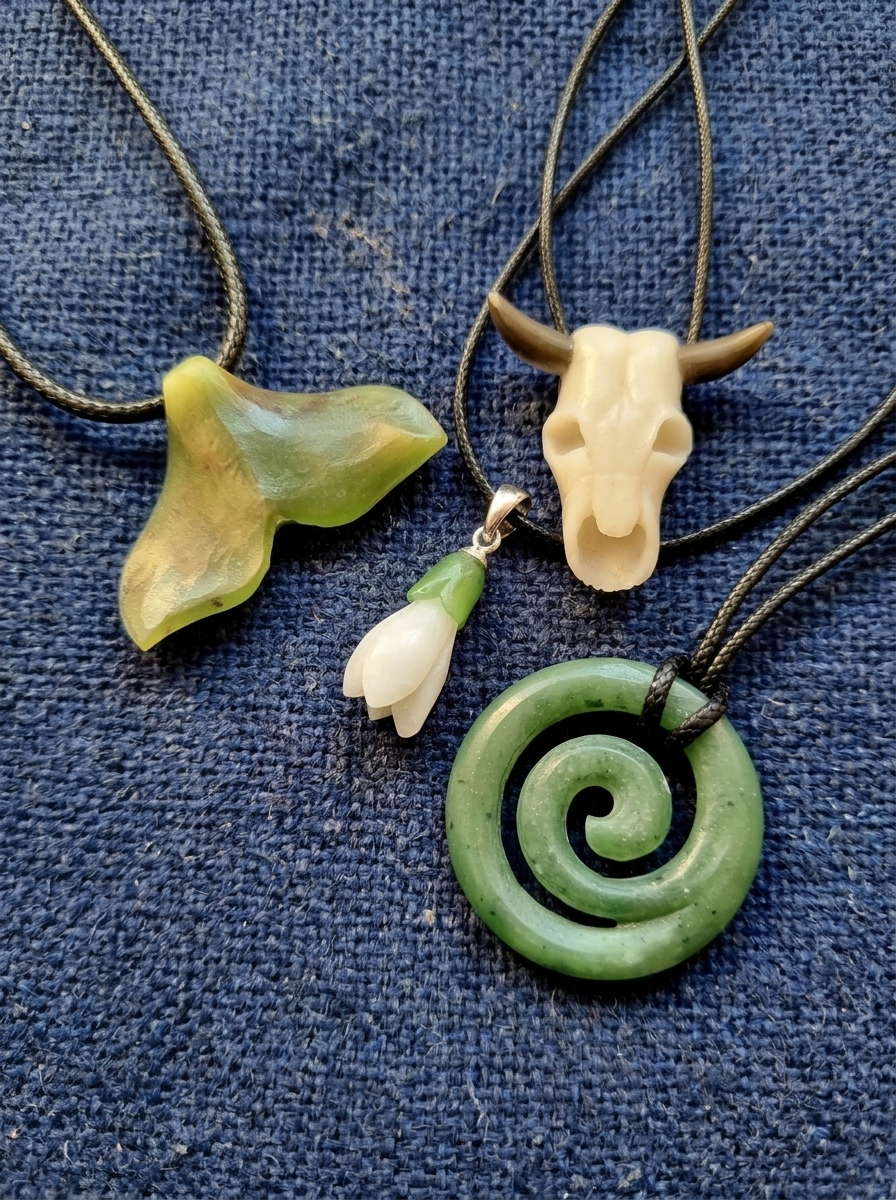
For wearable carved stone art with exceptional toughness, nephrite jade remains one of the strongest ornamental minerals used in lapidary history.
Handcrafted nephrite jade pendants are available at stone-flower.com, offering natural durability, intricate craftsmanship, and timeless geological beauty.
FAQ
Why are wulfenite crystals square?
Wulfenite crystallizes in the tetragonal system, causing crystal growth to expand laterally into thin square or rectangular plates.
Why is wulfenite considered fragile?
Its thin tabular crystal structure, low hardness, and brittle cleavage make wulfenite highly susceptible to chipping and vibration damage.
Is wulfenite rare?
Fine collector-quality wulfenite with sharp undamaged crystals and vivid color is considered rare and highly prized in the mineral market.