

Zoisite: The Parent Mineral of Tanzanite and Ruby-Rich Anyolite
Few minerals can produce both one of the world’s most valuable gemstones and one of the strangest ornamental rocks on Earth. Zoisite is the geological parent of tanzanite, the rare blue-violet gem found only in Tanzania, yet another variety of the same mineral hosts massive ruby crystals embedded inside vivid green rock. That remarkable combination is known as Anyolite—a material so visually dramatic that it appears artificially engineered.
For gemologists, zoisite is a technically fascinating mineral group because its crystal chemistry allows dramatic color variation, pleochroism, and trace-element substitution. For collectors and lapidaries, it represents one of the clearest examples of how microscopic structural changes can create entirely different gemstones from the same mineral species.
What Is Zoisite?
Zoisite is a calcium aluminum hydroxy sorosilicate belonging to the epidote mineral group.
- Chemical formula: Ca2Al3(SiO4)(Si2O7)O(OH)
- Mineral class: Sorosilicates
- Crystal system: Orthorhombic
- Hardness: 6–7 on the Mohs scale
- Luster: Vitreous
Zoisite forms in metamorphic environments where aluminum-rich rocks experience elevated pressure and temperature conditions.
Why Zoisite Is Important in Gemology
Zoisite is best known because it includes several gemologically important varieties:
- Tanzanite: blue-violet transparent zoisite
- Anyolite: green zoisite with ruby inclusions
- Thulite: pink manganese-rich zoisite
Gemological insight: Few mineral species display such extreme color diversity while maintaining nearly identical core crystal chemistry.
This versatility makes zoisite highly important in advanced gemstone identification and mineralogical research.
The Geological Origin of Zoisite
Zoisite forms during regional metamorphism, especially where calcium-rich and aluminum-rich rocks undergo recrystallization.
Typical formation environments include:
- Metamorphosed basaltic rocks
- Hydrothermal alteration zones
- Schists and gneisses
- High-pressure tectonic environments
Metamorphic trade secret: The stability of zoisite strongly depends on pressure-temperature balance. Slight changes in metamorphic conditions can shift mineral formation toward epidote, clinozoisite, or garnet instead.
This sensitivity explains why gem-quality zoisite deposits are extremely localized.
Tanzanite: The Most Famous Zoisite Variety
Tanzanite is the transparent blue-to-violet variety of zoisite discovered near Mount Kilimanjaro in Tanzania.
Color origin insight: Tanzanite owes its coloration primarily to vanadium impurities combined with heat-induced crystal lattice changes.
Most tanzanite on the market has undergone controlled heat treatment to remove brownish tones and intensify blue-violet saturation.
Key gemological properties of tanzanite include:
- Strong pleochroism
- High transparency
- Trichroic color behavior
- Excellent faceting potential
Professional cutter secret: Expert gem cutters orient tanzanite rough carefully to maximize blue face-up color because the crystal can display blue, violet, and burgundy simultaneously depending on viewing direction.
Anyolite: Ruby Crystals in Green Zoisite
Anyolite is one of the most visually distinctive ornamental stones in the mineral world.
It consists of:
- Green zoisite matrix
- Large embedded ruby crystals
- Occasional black hornblende inclusions
Mineralogical insight: The striking green color comes from chromium-bearing zoisite, while the ruby crystals are chromium-rich corundum formed under related metamorphic conditions.
This creates an extraordinary natural color contrast rarely matched in geology.
How Anyolite Forms
Anyolite develops in metamorphic environments where aluminum-rich rocks interact with chromium-bearing fluids.
Critical formation factors include:
- High-pressure metamorphism
- Chromium enrichment
- Calcium-aluminum silicate recrystallization
- Corundum stability conditions
Geological trade secret: The ruby crystals inside Anyolite often formed slightly earlier than the surrounding zoisite matrix, allowing green zoisite to crystallize around pre-existing corundum crystals.
Zoisite’s Optical Characteristics
Zoisite displays several advanced optical features important in gemology.
These include:
- Pleochroism
- Birefringence
- Variable refractive indices
- Directional color zoning
Advanced gemological insight: Tanzanite’s strong trichroism occurs because light traveling through different crystallographic axes interacts differently with vanadium-related electron absorption patterns.
This effect is one of the main reasons high-quality tanzanite requires expert cutting orientation.
Important Zoisite Localities
Significant zoisite deposits occur in several metamorphic regions worldwide.
Major sources include:
- Tanzania: tanzanite and Anyolite
- Norway: thulite deposits
- Austria: classic zoisite occurrences
- Pakistan: metamorphic crystal deposits
- India: ornamental zoisite materials
Tanzania remains the most economically important source because it produces both gem-quality tanzanite and commercial Anyolite.
Zoisite in Jewelry and Decorative Arts
Different zoisite varieties are used differently in lapidary work.
- Tanzanite: faceted gemstones
- Anyolite: carvings and cabochons
- Thulite: ornamental jewelry
Lapidary trade secret: Anyolite is difficult to polish evenly because ruby and zoisite possess different hardness levels, causing uneven abrasion during finishing.
Experienced cutters use carefully controlled polishing compounds to preserve both mineral phases without undercutting softer areas.
Zoisite vs Similar Minerals
- Zoisite: orthorhombic sorosilicate
- Epidote: monoclinic related silicate
- Jadeite: pyroxene mineral with higher toughness
- Corundum: aluminum oxide forming ruby inclusions
Professional gemological testing often requires refractive index analysis and pleochroic observation to distinguish similar green metamorphic minerals.
Durable Stone Art and Nephrite Jade
While zoisite varieties are admired for their dramatic color and rarity, nephrite jade remains one of the toughest ornamental minerals used in carved stone artistry.
Its dense interlocking fibrous structure gives it exceptional resistance to fracture and impact.
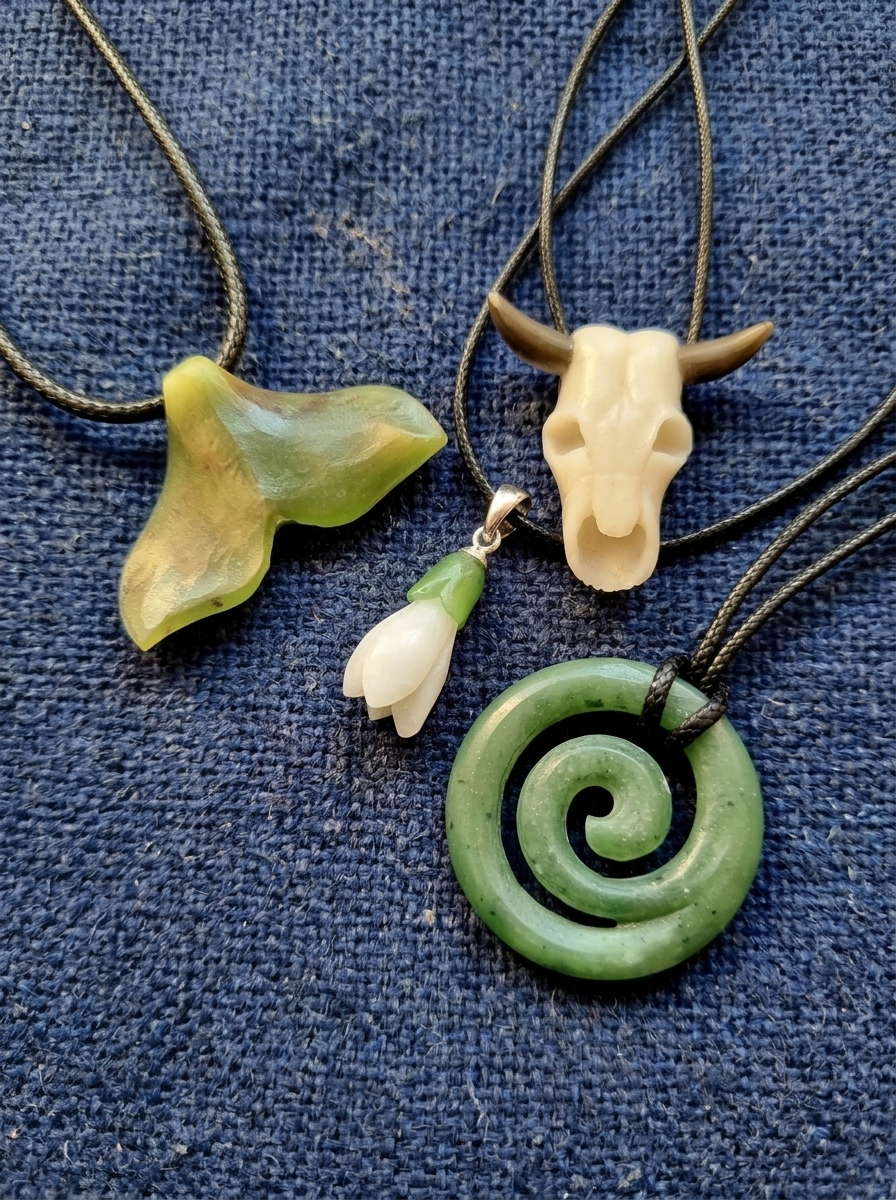
Handcrafted nephrite jade pendants are available at stone-flower.com, featuring natural stone craftsmanship inspired by the beauty of Earth’s finest minerals.
FAQ
What is the connection between zoisite and tanzanite?
Tanzanite is the blue-violet transparent gemstone variety of the mineral zoisite.
What is Anyolite made of?
Anyolite consists primarily of green zoisite containing large embedded ruby crystals, often with black hornblende inclusions.
Why is tanzanite pleochroic?
Tanzanite’s crystal structure absorbs light differently along separate crystallographic directions, creating multiple visible colors depending on viewing angle.