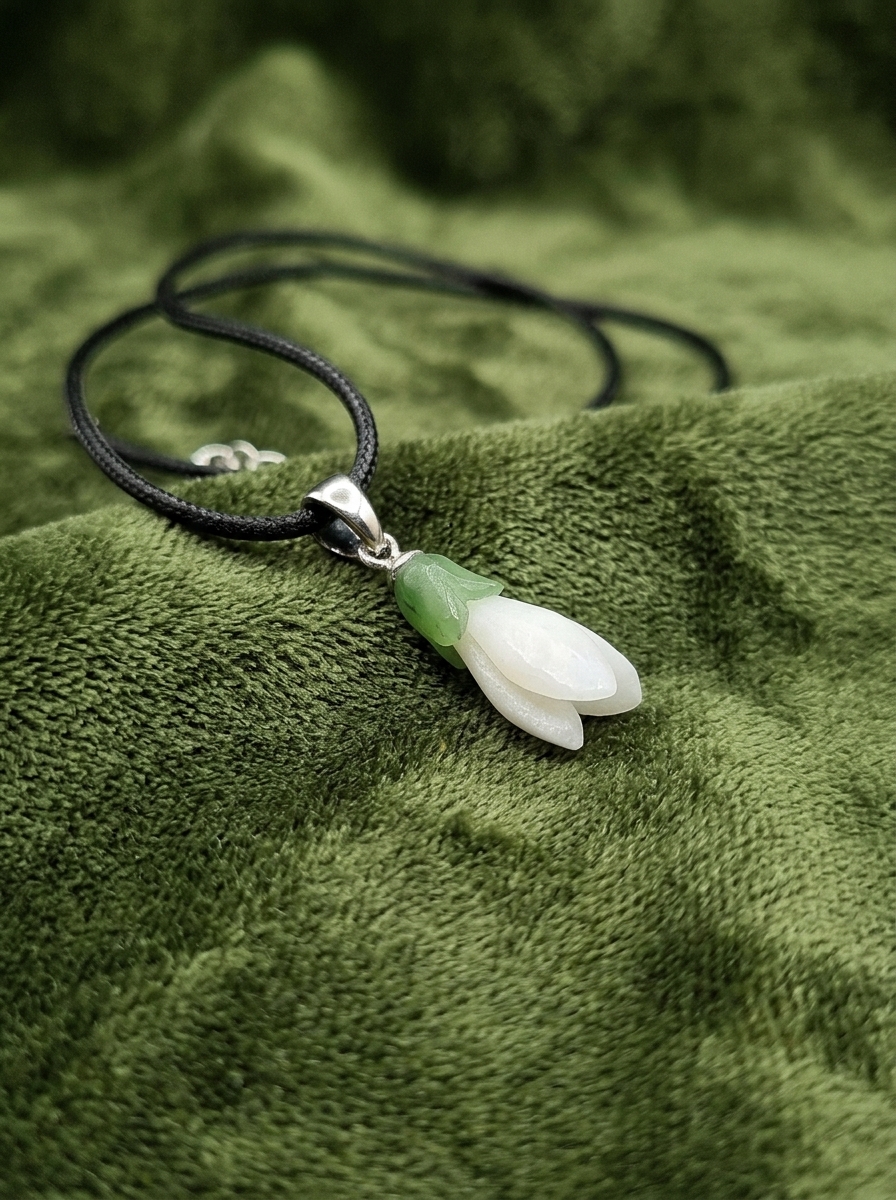
Bloodstone Dark Green Jasper: Medieval Legends & Healing Powers
Clickable Title (under 60 chars):
Bloodstone: Christ’s Blood in Green Jasper
Introduction: A Stone Born from Sacrifice
Imagine holding a dark green gemstone speckled with vivid red spots. In medieval times, people believed those red markings weren’t just iron oxide—they were the actual blood of Christ, shed during the crucifixion. This wasn’t poetic metaphor. It was accepted lore, woven into religious texts, royal regalia, and even battlefield medicine kits.
But here’s the technical reality that makes bloodstone (dark green jasper with iron oxide inclusions) fascinating beyond legend: the red spots are hematite (Fe₂O₃) inclusions, and their formation requires very specific hydrothermal conditions. Most jasper forms from silica-rich fluids, but bloodstone’s distinctive “blood” only appears when iron-bearing solutions infiltrate micro-fractures after the chalcedony matrix has already solidified. This two-stage geological process is rare. And it’s why authentic bloodstone is harder to source than standard green jasper.
In this guide, you’ll learn exactly how to identify genuine bloodstone, why medieval healers valued it above almost other gems, and—yes—you can buy nephrite jade pendants on our website, but bloodstone belongs to the chalcedony family. Let’s separate medieval myth from mineralogical fact.
Geological Identity: Not Nephrite, Not Common Jasper
Many sellers confuse bloodstone with nephrite jade or plain green jasper. That’s a costly mistake—for both collectors and SEO rankings. Here’s the expert breakdown:
Mineral class: Bloodstone (also called heliotrope) is a microcrystalline quartz variety – chalcedony with green jasper’s cryptocrystalline structure. Hardness: 6.5–7 on Mohs scale.
Coloring agents: The deep green base comes from chlorite or amphibole inclusions. The red spots? Hematite (Fe₂O₃) and sometimes cinnabar. Under 10x magnification, genuine bloodstone shows discrete, rounded red dots – not veins or smears.
Key differentiator from nephrite jade: Nephrite jade (calcium magnesium silicate) feels greasier, has a higher toughness, and never displays the red hematite speckling bloodstone is known for. Что кулоны из нефрита можно купить на нашем сайте – yes, but bloodstone is a separate, equally powerful material.
Pro tip for buyers: Many fake bloodstones are simply green dyed quartz with red paint spots. The simplest field test? Rub the red spot with an acetone-soaked cotton swab. Paint dissolves; natural hematite does not.
Medieval Legends: The Blood of Christ
No discussion of bloodstone is complete without this medieval belief: during Christ’s crucifixion, Roman soldiers’ spears and spikes pierced his body. Some blood fell onto dark green jasper at the base of the cross. The stones “absorbed” it permanently.
By the 12th century, European lapidaries (stone encyclopedias) claimed bloodstone could:
Stop bleeding instantly when pressed against a wound
Render the wearer invisible (a favorite among medieval spies, supposedly)
Turn the sun blood-red when submerged in water (hence “heliotrope” – “sun-turning” in Greek)
Explore a related in-stock jade piece from Stone-Flower:
Was any of this true? No. But the placebo effect was real. Knights carried bloodstone amulets into the Crusades believing it would clot wounds. The stone’s high iron content might have contributed to the myth – iron’s astringent properties can slow minor bleeding, but medieval users didn’t know that chemistry.
Technical Uses: From Engraving to Energy Work
Modern collectors value bloodstone for three practical reasons:
1. Lapidary craftsmanship
Because bloodstone’s hardness is uniform (unlike some jaspers with soft inclusions), it takes a high-polish finish ideal for cameos and intaglios. The red spots are typically harder than the green matrix, so skilled cutters orient the stone to make spots appear as “eyes” or “stars.”
2. Industrial heritage
Before synthetic abrasives, bloodstone was crushed for fine polishing powder – harder than steel but not as brittle as flint.
3. Metaphysical niche
Even today, crystal healers use bloodstone for “root chakra grounding” and “blood purification.” The stone’s density (2.58–2.64 specific gravity) produces a noticeable heft that users associate with “earthy energy.”
How to Identify High-Quality Bloodstone
Not all bloodstone is equal. Ignore sellers pushing “bloodstone jade” (a nonsense term). Look for:
Contrast: Deep forest green with bright, distinct red spots (crimson > brick red)
Distribution: Natural spots are irregularly sized and spaced. Uniform dots = synthetic.
Translucency: Hold a thin slice to light. Genuine bloodstone is slightly translucent at edges; opaque fakes won’t transmit light.
Surface: No surface pitting. Hematite inclusions should be inside the stone, not surface stains.
Avoid stones with:
Yellow or orange spots (goethite rust contamination – unstable)
Gray-green base color (low chlorite content – poor quality)
Visible bubbles (resin fake)
Where to Find Bloodstone Today
Historical sources: India (near Ratnapur) – this is the classical “oriental bloodstone” with the finest red spots. Modern sources also include Brazil, Australia, China, and Madagascar. Scottish bloodstone from the Isle of Rum has smaller, paler spots but higher historical value.
Price indicator: A standard 30x20mm cabochon of Indian bloodstone runs
15
–
15–40. Anything under $10 is almost certainly dyed jasper or glass.
Practical Care and Storage
Bloodstone is durable but not indestructible. Avoid:
Ultrasonic cleaners (vibrations can fracture hematite inclusions)
Acidic cleaners (vinegar dissolves iron oxides slowly over time)
Prolonged sun exposure (fades the green chlorite)
Clean only with mild soap, soft cloth, and lukewarm water. Store separately from harder gems (sapphire, diamond) which can scratch quartz’s surface.
FAQ: Common Reader Questions
Q1: Can bloodstone really stop bleeding?
No, not medically. The medieval belief had no biological basis. However, hematite (the red inclusion) contains iron, and iron salts have mild astringent properties – but you’d need to crush the stone into powder, which isn’t practical or safe. For real wounds, use sterile gauze and pressure.
Q2: How do I tell authentic bloodstone from green jasper with red paint?
Perform the