Graphite: Metamorphosed Carbon That Shares Its Identity With Diamond
Two materials, one element, radically different realities. Graphite—the soft, dark material in pencils—and diamond—the hardest natural substance on Earth—are both pure carbon. The difference is not chemistry. It is structure, pressure, temperature, and time acting at a planetary scale. This structural duality makes graphite one of the most important minerals in metamorphic geology, industrial engineering, and high-temperature chemistry.What Is Graphite? Atomic Structure and Classification
Graphite is a crystalline form of carbon (C) belonging to the hexagonal crystal system. Unlike diamond, where carbon atoms form a rigid 3D tetrahedral network, graphite is arranged in stacked planar sheets.- Chemical composition: Pure carbon (C)
- Crystal system: Hexagonal
- Hardness: 1–2 (Mohs scale)
- Cleavage: Perfect basal cleavage
- Luster: Metallic to dull
Why Graphite and Diamond Are the Same Element
Graphite and diamond are both allotropes of carbon. This means they share the same chemical element but differ in atomic arrangement. Key structural distinction:- Diamond: sp³ hybridization → 3D tetrahedral network
- Graphite: sp² hybridization → 2D planar sheets
Metamorphic Formation of Graphite
Graphite forms primarily through metamorphism of organic carbon-rich material or reduction of carbon-bearing fluids under high-temperature conditions. Typical formation environments include:- Regional metamorphism of sedimentary organic matter
- High-grade metamorphic terrains (amphibolite to granulite facies)
- Contact metamorphism near igneous intrusions
Graphite vs Diamond: Why Structure Controls Everything
The difference between graphite and diamond is a textbook example of how atomic structure dictates macroscopic properties.- Hardness: Graphite is soft due to weak interlayer bonding
- Diamond: Extremely hard due to strong 3D covalent network
- Electrical conductivity: Graphite conducts electricity; diamond does not (pure form)
- Thermal behavior: Graphite is highly thermally stable in inert environments
Industrial and Technological Importance of Graphite
Graphite is not just a geological curiosity—it is a critical industrial material.Key applications include:
- Electrodes: Used in electric arc furnaces for steel production
- Batteries: Anode material in lithium-ion batteries
- Refractories: High-temperature crucibles and furnace linings
- Lubricants: Dry lubrication in extreme conditions
Explore a related in-stock jade piece from Stone-Flower:
Snowdrop Jade Pendant — White & Green Siberian Nephrite, Hand-Carved, 2.5 cm to Pinterest (opens in a new window)

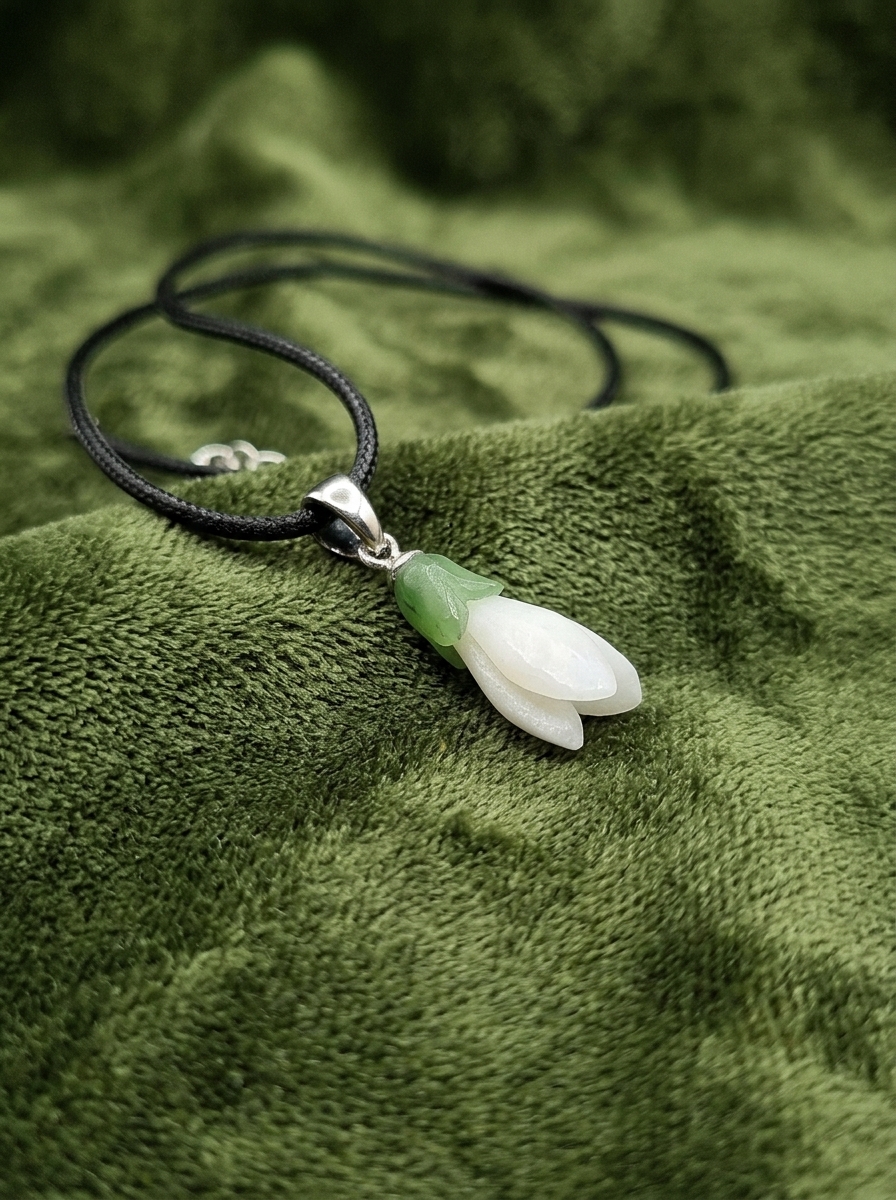
Snowdrop Jade Pendant — White & Green Siberian Nephrite, Hand-Carved, 2.5 cm
Hand-Carved Siberian Jade "Snowdrop" Pendant (2.5 cm)
A delicate botanical flower pendant measuring 2.5 cm in length, hand-carved from genuine Siberian jade. Features three sculpted petals of translucent white jade beneath a rich green jade sepal. Finished with meticulous hand polishing without waxes, varnishes, or chemical sealants, highlighting the pure natural luster of the stone. Fitted with a hypoallergenic medical-grade metal bail on a cord.
Graphite in Metamorphic Petrology
In geology, graphite serves as an important indicator of metamorphic processes and fluid histories. It commonly appears in:- Schists and gneisses
- Marble derived from carbonaceous limestones
- High-grade regional metamorphic belts
Crystal Morphology and Identification
Graphite occurs in several forms:- Flake graphite: Most common industrial form
- Amorphous graphite: Fine-grained, microcrystalline aggregate
- Vein graphite: High-purity, hydrothermal origin
- Softness (easily marks paper)
- Metallic gray streak
- Conductivity testing
From Carbon Minerals to Durable Gem Materials
Although graphite is scientifically fascinating, it is not suitable for jewelry use due to its softness and structural fragility. For durable ornamental materials, nephrite jade is a far superior choice due to its interlocking fibrous microstructure, which gives it exceptional toughness. Nephrite jade pendants are available for purchase on our website, stone-flower.com, offering handcrafted pieces designed for long-term wear and cultural significance.
High-Temperature Stability and Extreme Conditions
Graphite remains stable at extremely high temperatures in the absence of oxygen, making it essential in advanced engineering systems. It is used in:- Nuclear reactor moderators
- Spacecraft thermal shielding components
- High-temperature chemical processing systems
Why Graphite Matters in Earth Science
Graphite provides insight into deep Earth carbon cycling and metamorphic evolution. Its presence in ancient rocks helps geologists reconstruct:- Organic carbon burial and transformation
- Metamorphic pressure-temperature histories
- Fluid-rock interaction pathways