
Description
Bright Green Nephrite Jade Horse Head Cane Handle
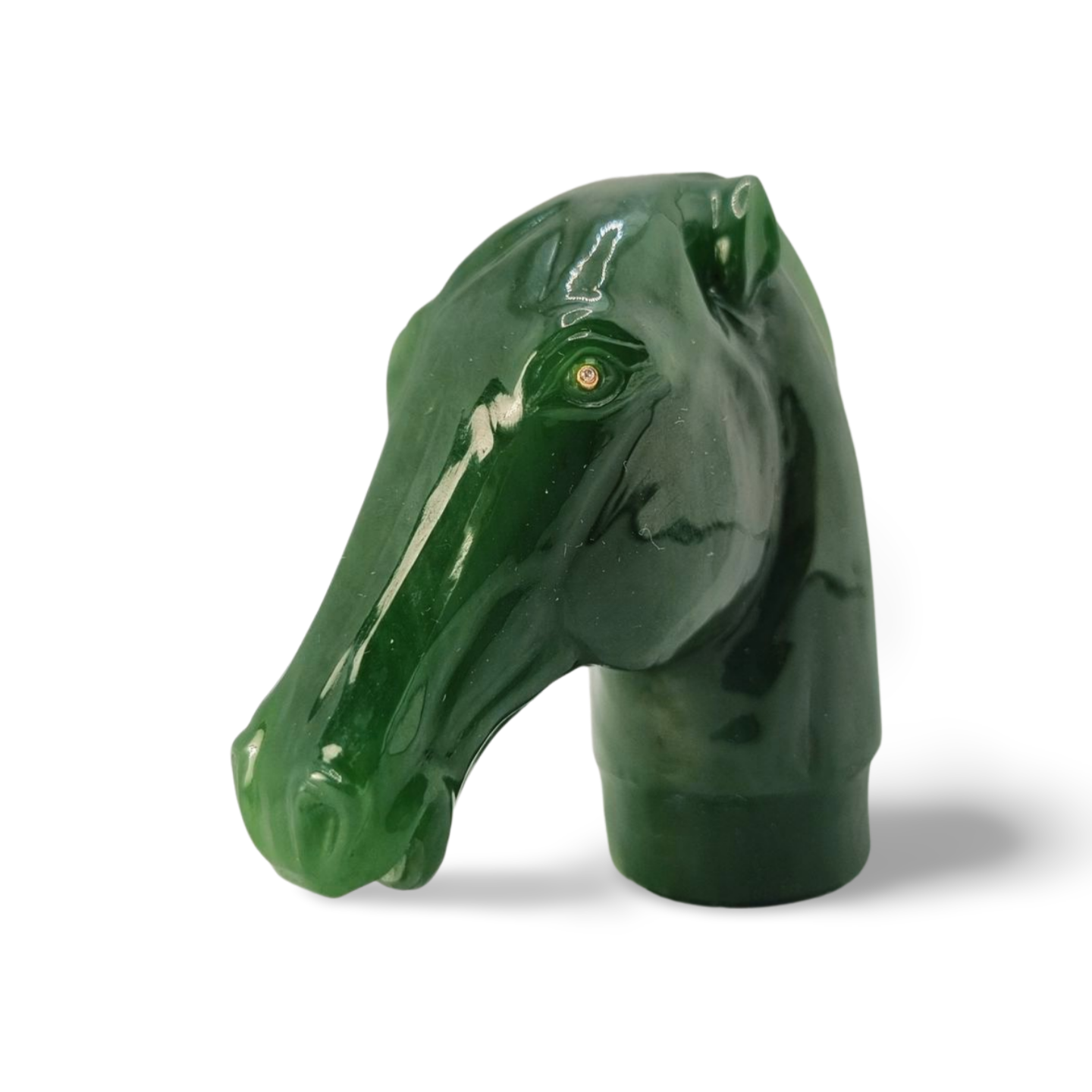
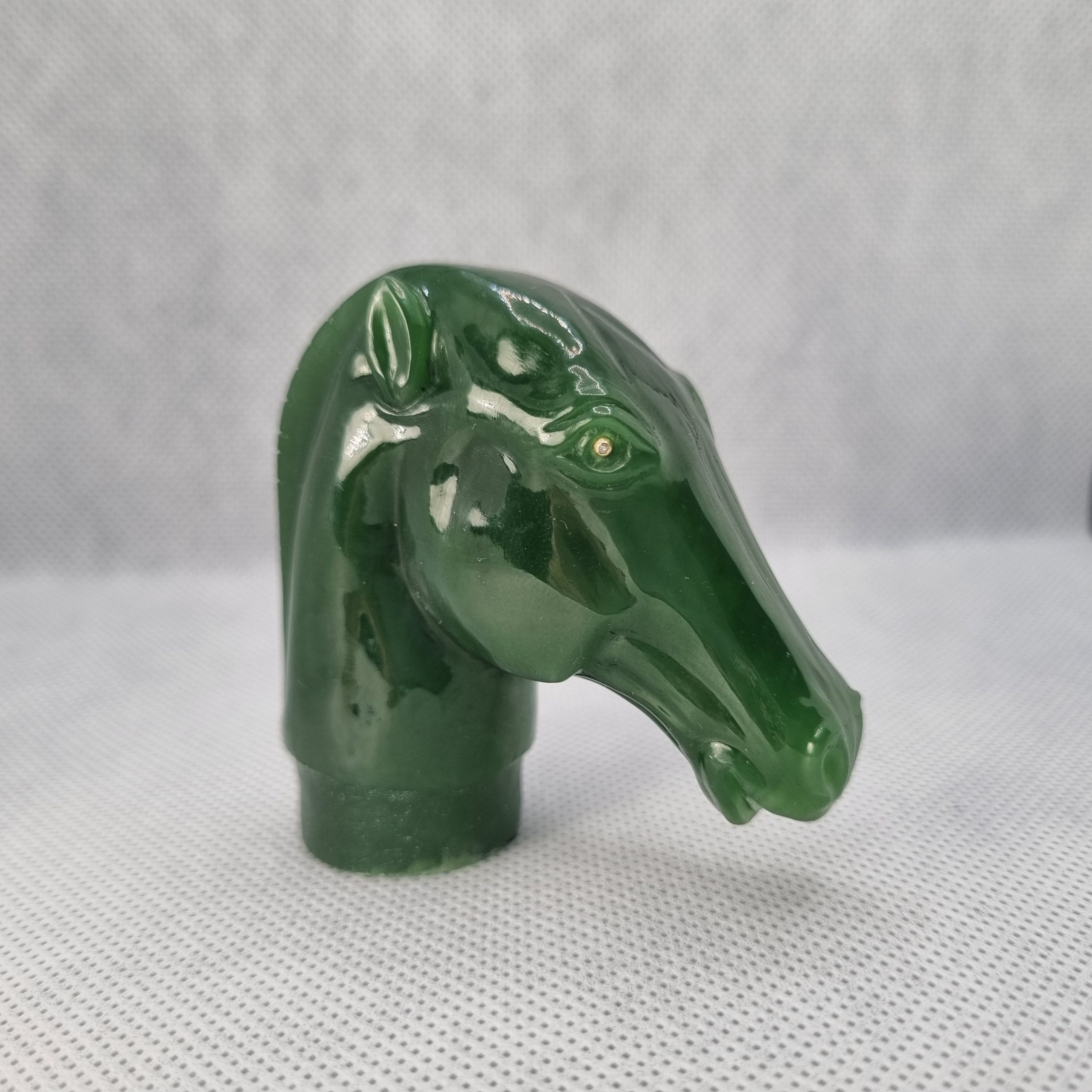
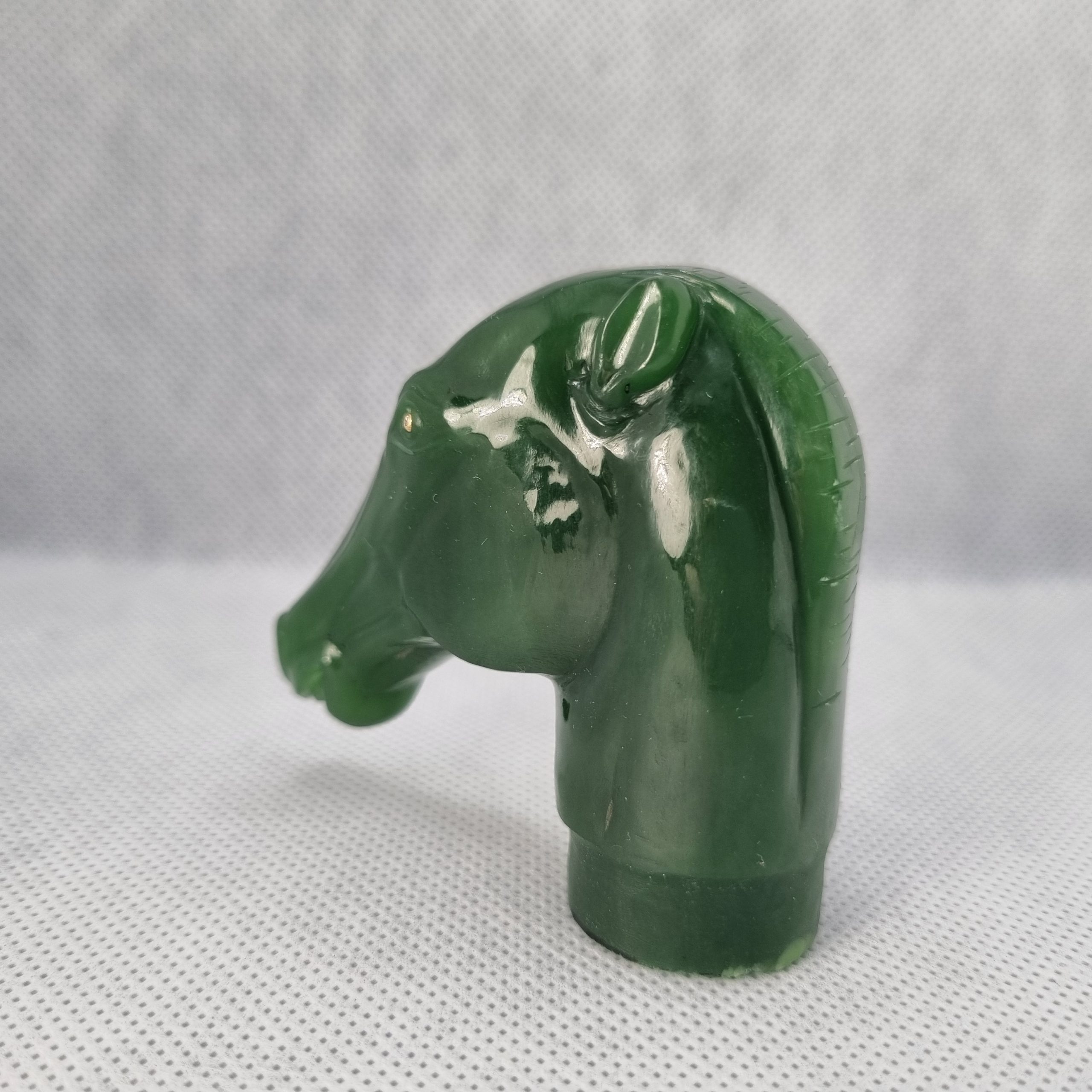
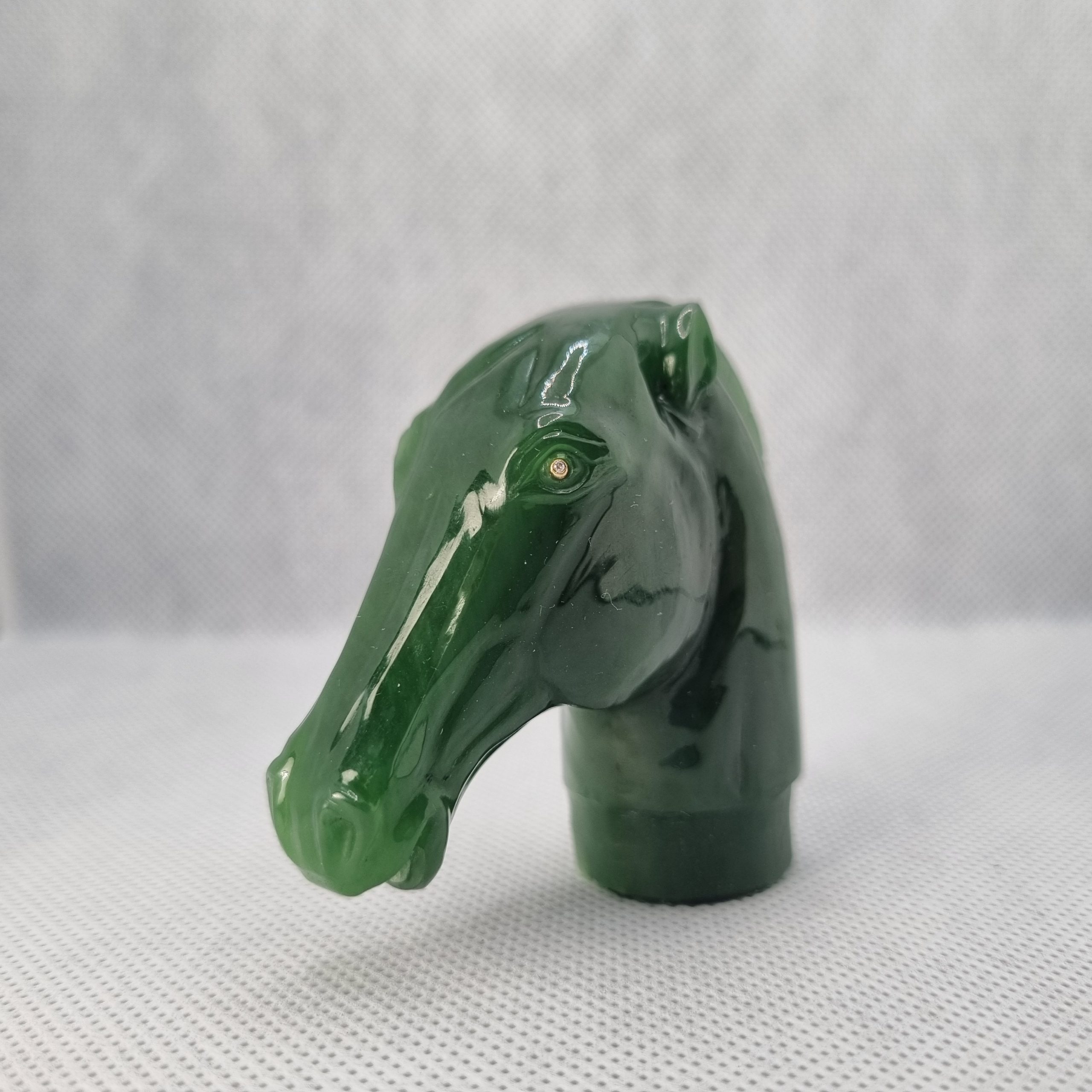
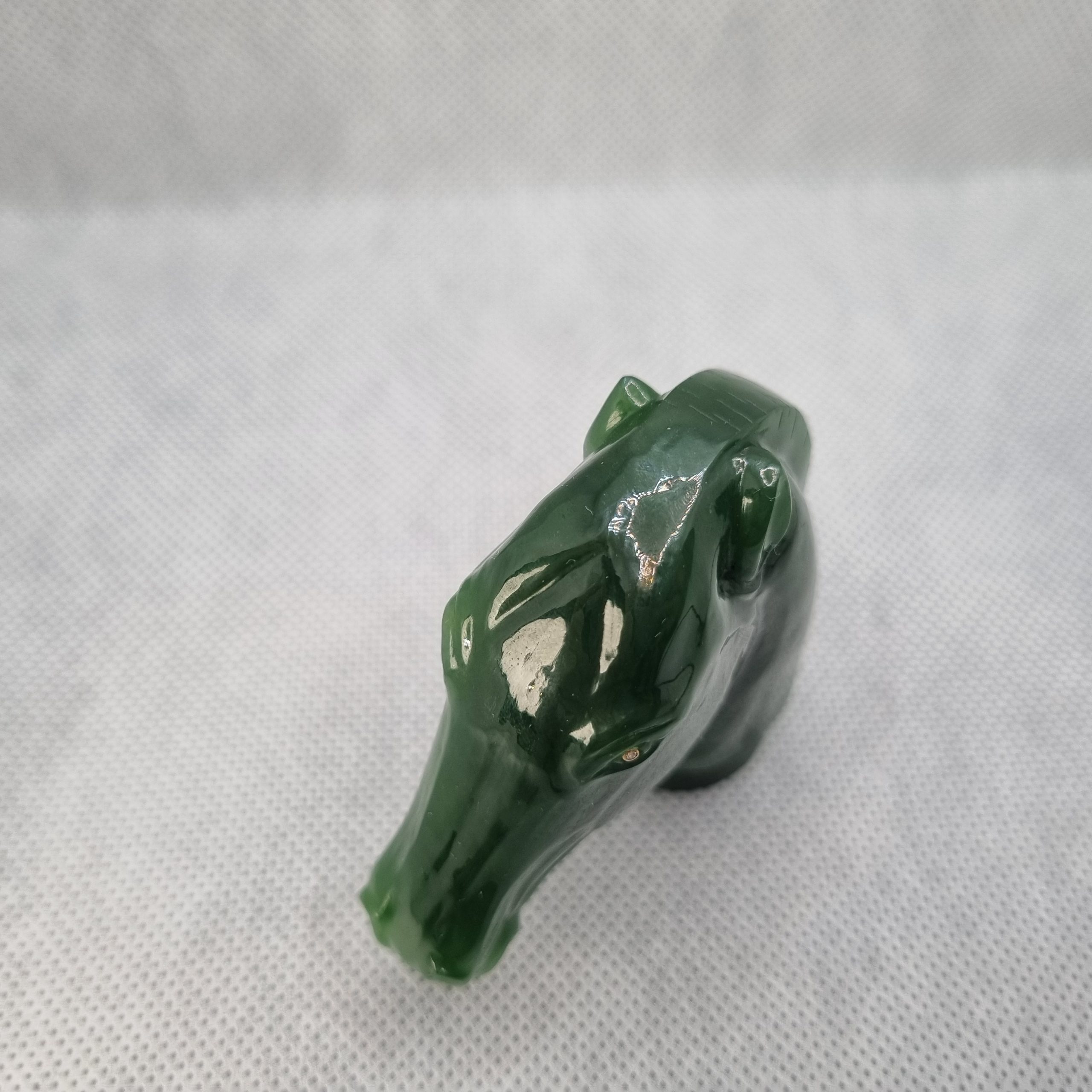
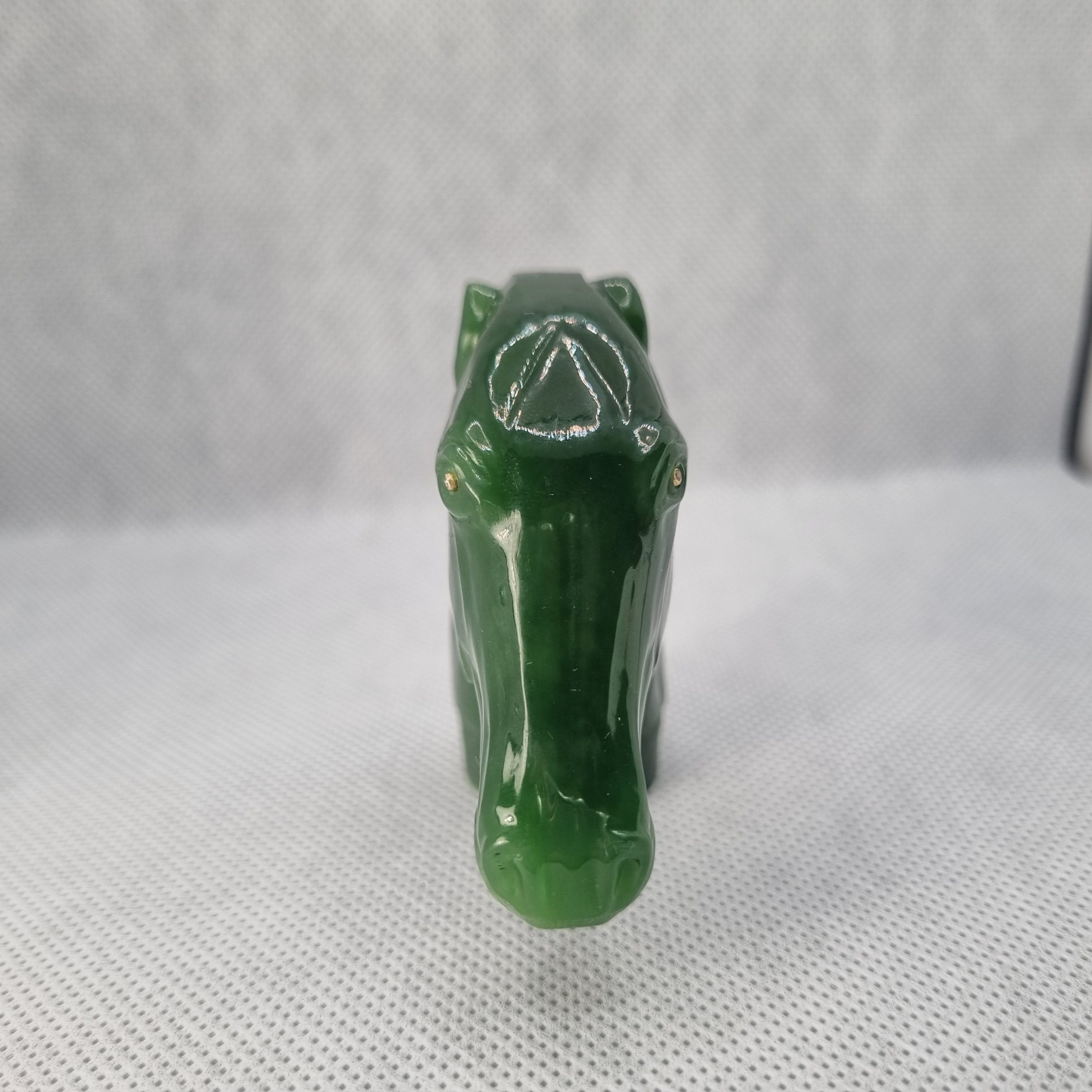
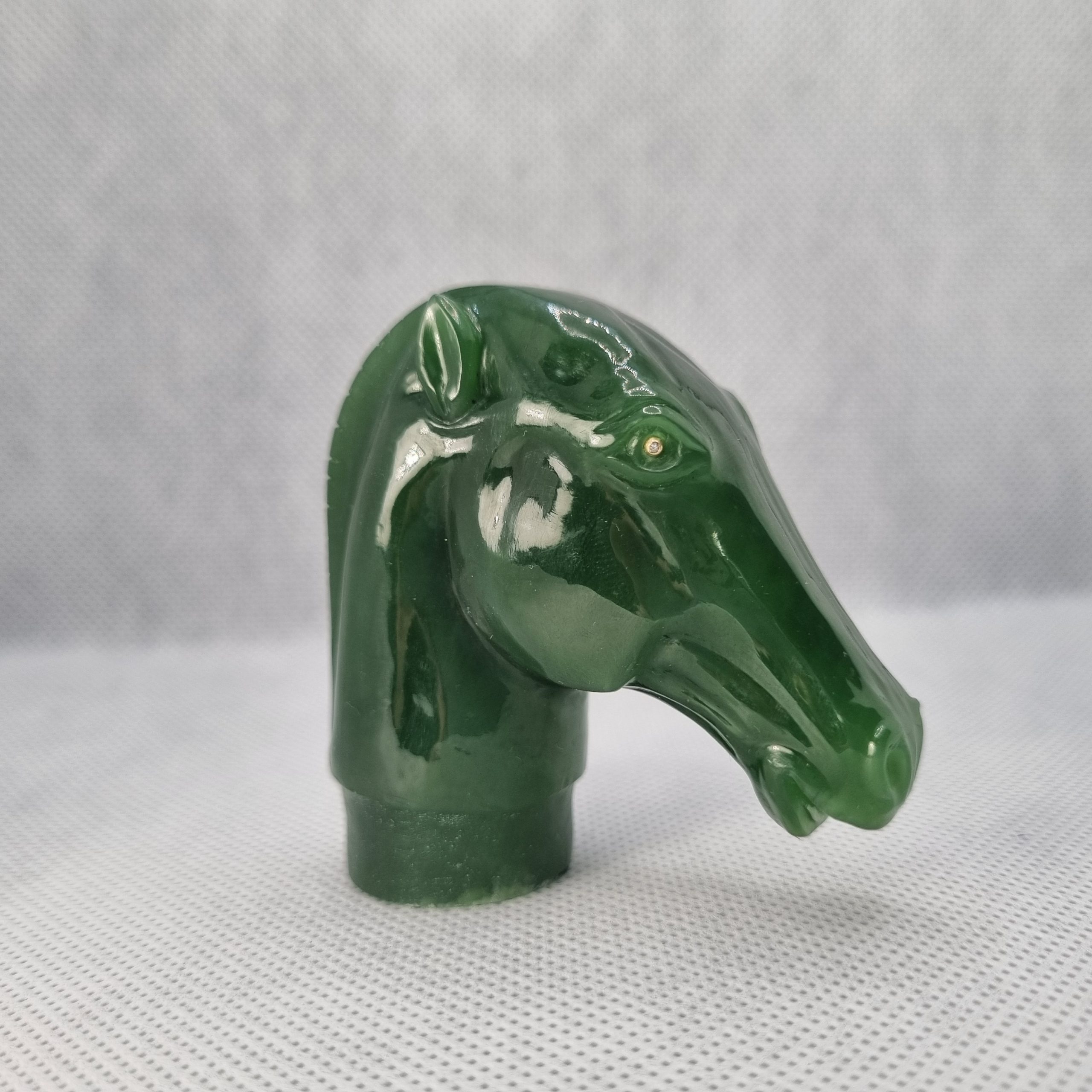
This horse head cane handle is carved by hand from a solid piece of natural nephrite jade in a rich, bright green. The stone is deep and evenly colored, with soft cloudy shading in places, and it is polished to a high, glass-like gloss that catches the light along the neck, the cheek and the long nose.
A Lifelike Horse Portrait in Stone
The master lapidary has shaped the head with careful attention to anatomy: alert, pointed ears, a defined cheek, flowing lines of the neck and mane, and softly flared nostrils. The eye is set with a small gemstone in a metal setting, which gives the horse a bright, living look. Nephrite jade is a tough stone, which makes it a good choice for detailed carving that is meant to be held and handled.
For Walking Sticks and Collections
The head sits on a cylindrical base made for mounting on a cane shaft. It is a distinctive handle for a gentleman’s walking stick or a decorative cane, and it is also a handsome display piece for a desk or a shelf. It makes an unusual gift for horse lovers, riders, collectors of walking sticks and admirers of fine stone carving.
The Horse as a Symbol
For thousands of years the horse has stood for strength, freedom, loyalty and nobility. Carved in green jade, a stone long valued in many cultures, it becomes a lasting piece with a classic, timeless feel.
Why You Will Like It
- Solid nephrite jade, hand-carved and polished by an experienced master
- Bright green color with a deep, glossy finish
- Detailed horse head with an inlaid gemstone eye
- Works as a walking stick handle or as a display sculpture
- Each piece is unique in color and pattern
Product Details
- Material: natural bright green nephrite jade
- Eye: gemstone in a metal setting
- Handle size: [XX]
- Base diameter for mounting: [XX] mm
- Handmade; color and pattern vary slightly from stone to stone
Care Instructions
Wipe with a soft dry cloth. Avoid sharp knocks and harsh chemicals. Keep the handle away from hard surfaces, since the ears and the nose are the most delicate parts of the carving.