
Description
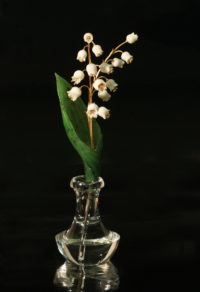
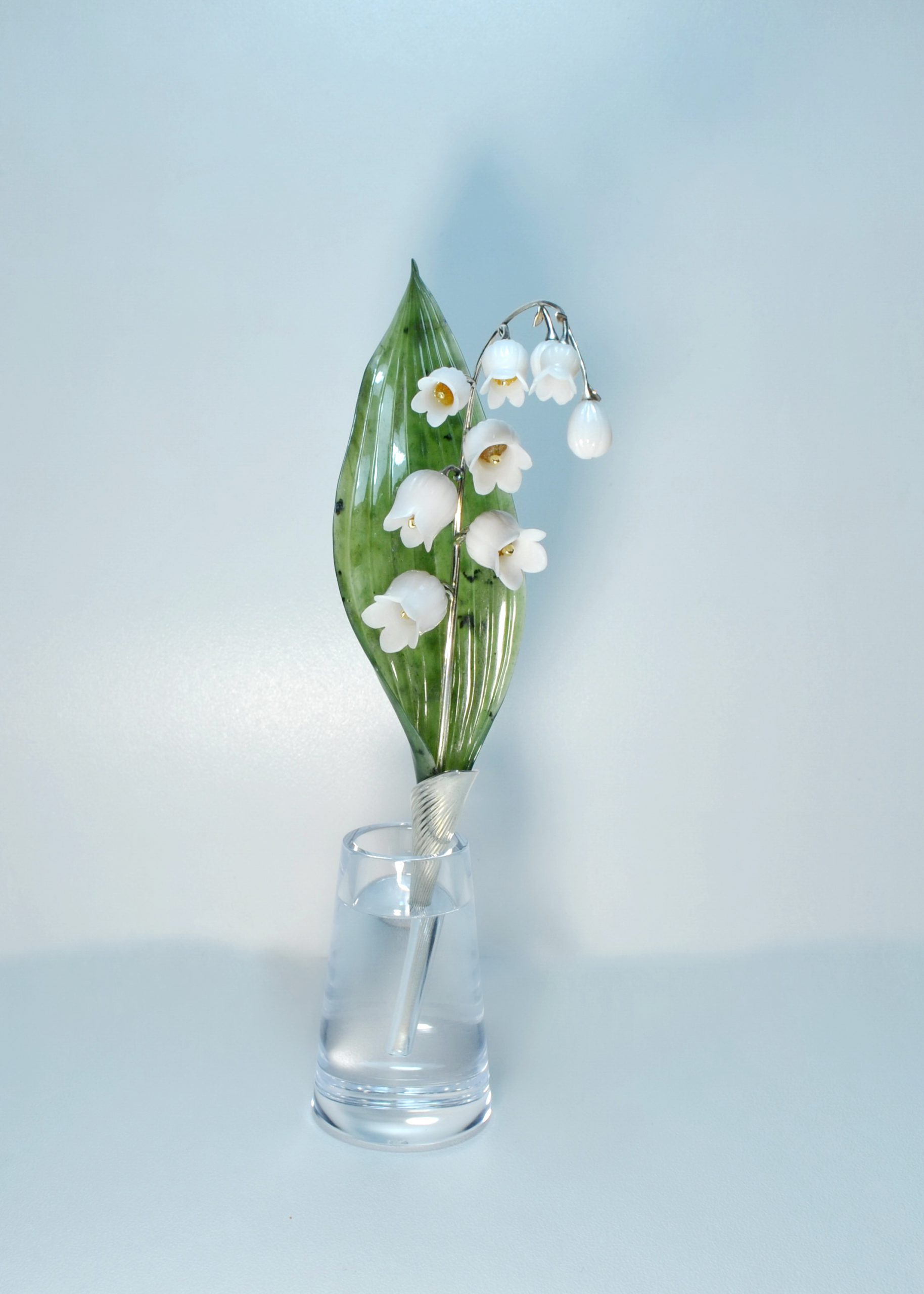
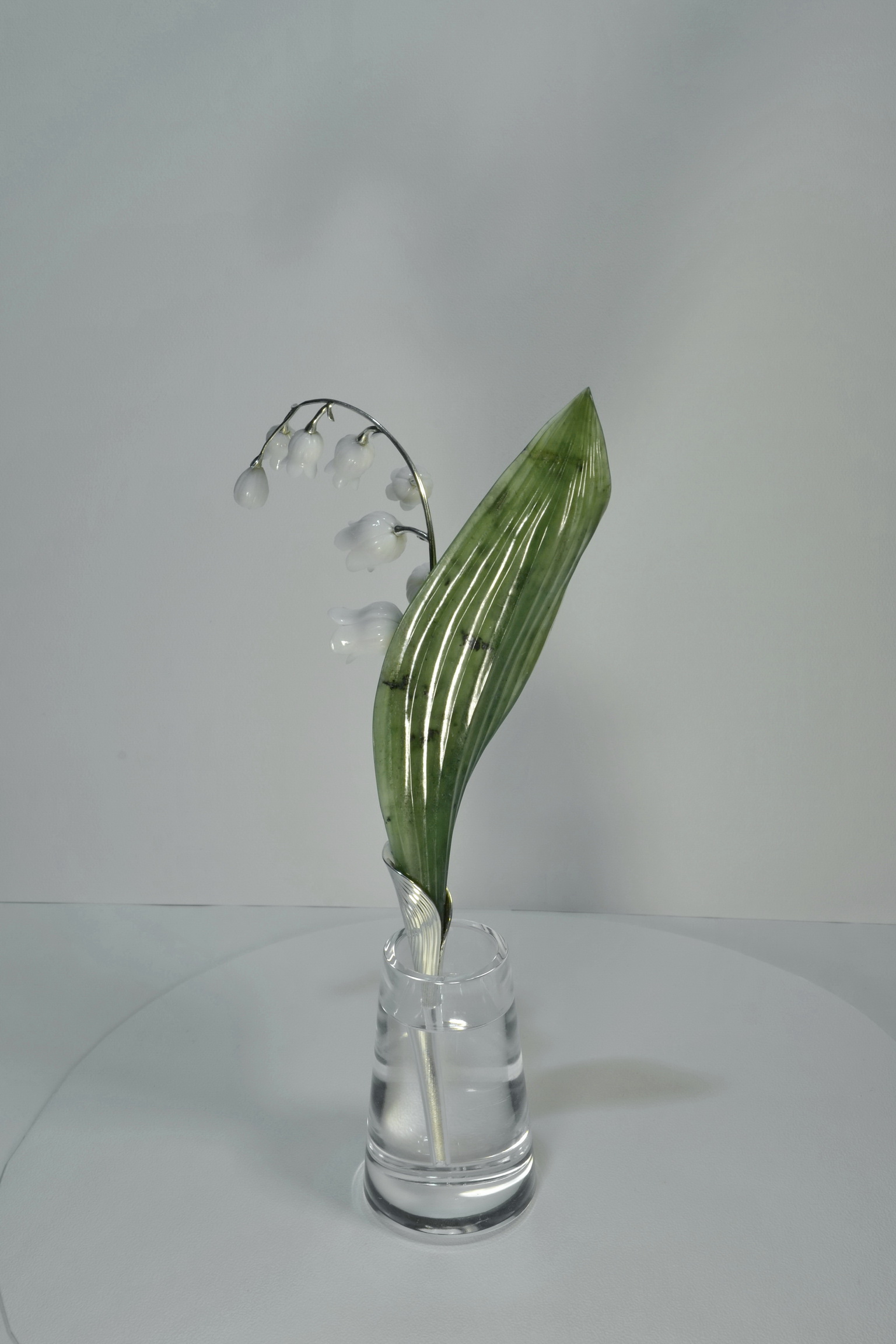
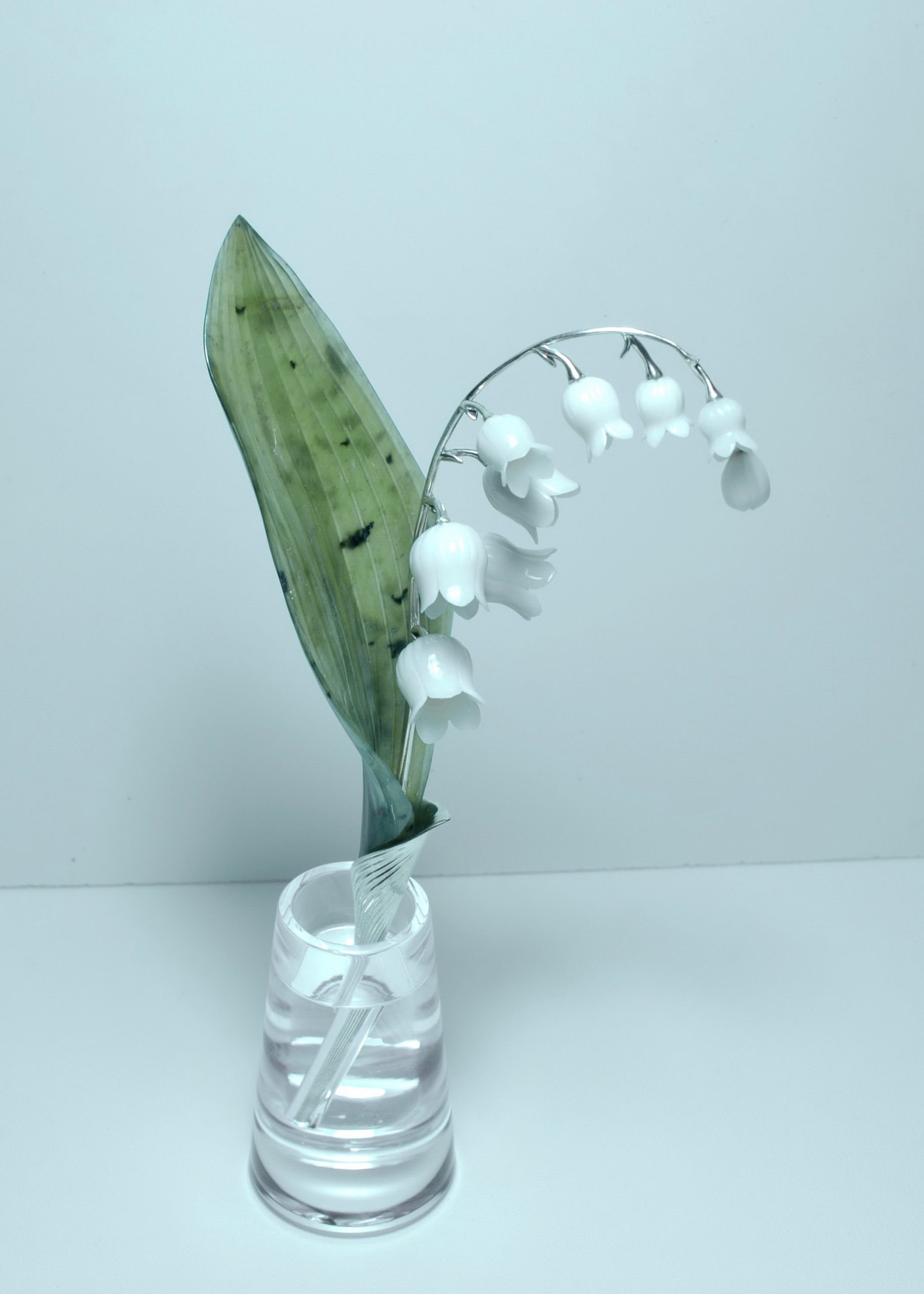
LILY OF THE VALLEY flower in faberge style
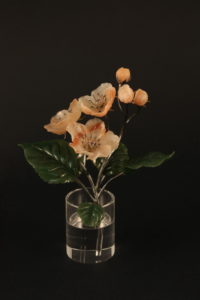
FABERGE’S FLOWER STUDIES are probably his most ex- quisite objects. They incorporate all the painstaking techniques and expensive materials usually seen in his work, and their chief purpose is to delight the eye with a dec- orative reminder of the short Russian spring and summer.
Their inspiration is rooted in several different artis- tic traditions. Firstly, there is the lapidary carving tradition in Russia, the importance of which has already been men- tioned in connection with Faberge’s animal sculptures . In her essay on the Kremlin’s collection of Tsarina Marie Feodorovna’s belongings, Tatiana Muntian points out that the imperial Ekaterinburg and Peterhof fac- tories made bunches of amethyst grapes, flowers and berries of semi-precious stones and that these were collected by the Tsarina.
LILY OF THE VALLEY flower in faberge style
1 According to a history of the state Peterhof lap- idary works, the factories were ‘burdened with orders from the court for their private requirements, presents and exhibitions abroad‘.
2 Faberge would have been well aware of the work produced by these factories and that of the firm of Pavel Ovchinnikov, who supplied a betrothal bouquet in silver, gold and enamel for Marie Feodor- ovna’s marriage in 1886. It should be noted that Marie Feodorovna also owned several of Faberge’s flowers.
Secondly, examples of stone and jewelled bouquets were to be found across Europe, made by court jewellers in the eighteenth century. Carl Faberge would undoubtedly have seen such objects during his apprenticeship, particu- larly in France. Faberge had also repaired a flower bouquet
in the Hermitage made by Catherine the Great’s court jeweller, Jeremie Pauzie.

The influence of oriental art is also seen in Faberge’s botanical pieces, particularly in the pine tree. Bir- baum records how Faberge first became aware of Chinese hardstone carvings of flowers when a bouquet of chrysan- themums was brought to him for repair. The chrysanthemums were made entirely from different stones and other nat- ural materials such as coral, although Birbaum dismissed Chinese flower carvings as ‘curiosities of the stone carver’s skill rather than works of art‘.3 The natural beauty of flowers strongly appealed to Faberge, and this explains why his flower studies are so realistic and, for the most part, botanically accurate. Their naturalism enhanced their popularity with his clients in Rus- sia, where the short spring and summer months meant that home-grown flowers were seen only very briefly. Wealthy members of society were able to afford flowers imported from the south of France, which were kept on ice to pre- serve their freshness during the long journey to Russia, but they clearly also enjoyed the charming and decorative hardstone alternatives. Moreover, the intrinsic decorative quality of the flowers was perfectly in keeping with the bibelots and objets d’art displayed in great numbers in the apartments of Tsarinas Marie Feodorovna and Alexandra Feodorovna as well as their contemporaries.
The retail cost of the flowers was considerable because their manufacture was so expensive. Birbaum acknowledges that the cost of the flowers was sometimes ‘as much as several thousand roubles’ each.4 The most expen- sive flower bought through the London branch was the chrysanthemum
The first stage of production involved the design- ers. According to Bainbridge these were Carl Faberge himself, assisted by Franz Birbaum. The enamelling was carried out by Alexander and Nicholas Petrov and by Boitzov.
The stone leaves were cut by Kremlev and Derbyshev, and the precious stones set by August and Albert Holm- strom. Finally the gold stalks and grasses were added and the flowers assembled in the workshop of Michael Perchin and later in that of Henrik Wigstrom. The whole process was apparently carefully monitored by Carl Faberge at each stage.5 Faberge’s flowers are often not marked, mainly because the stems were too fragile to stamp, but occasionally marks are found which help to determine when they were made and by which workmaster. Of the twenty-six flowers in the Royal Collection, eight are marked: one is stamped FABERGE alone, one is marked by Feodor Afanassiev and six by Henrik Wigstrom. Drawings for some of the flow- ers by Wigstrom have recently been discovered in an unpublished album; some relate to the flowers now in the Royal Collection
 Follow @stone_flower_faberge