

The Sunrise Ruby: Unveiling Earth’s Rarest 25.59-Carat Masterpiece
In the rarefied realm of high gemology, where geological marvels intersect with human fascination, certain stones transcend mere value to become legendary. Among these titans, the Sunrise Ruby stands as an undisputed monarch. This 25.59-carat Burmese stone isn’t just the most expensive ruby ever sold; it is a peerless embodiment of nature’s artistry, representing the zenith of rubellite perfection. Join us as we delve into the intricate factors that elevate this particular gemstone from extraordinary to utterly unique.
The Genesis of Rarity: A Mogok Masterpiece
To understand the Sunrise Ruby’s unparalleled status, one must first appreciate its origin: the fabled Mogok Valley in Myanmar (formerly Burma). For centuries, Mogok has been the primary source of the world’s finest rubies, a geological anomaly where the ideal conditions for corundum formation converged. Here, within ancient marble formations, ruby crystals grow under immense pressure and high temperatures during regional metamorphism. The crucial element is chromium (Cr
+)—the chromophore responsible for ruby’s red hue—present in optimal concentrations, alongside an exceedingly low iron (Fe
+/Fe
+) content. Iron, even in trace amounts, can quench fluorescence and impart a darker, often brownish tone, diminishing the stone’s vibrant glow. In Mogok rubies, this low iron content allows for a strong red fluorescence under ultraviolet light, contributing significantly to their coveted “pigeon’s blood” color—a vivid, almost incandescent red that appears to glow from within, even in low light conditions.
Anatomy of Perfection: Decoding the Sunrise Ruby’s Superiority
The Sunrise Ruby’s astronomical value derives from its exceptional adherence to every critical quality factor:
- Color: The Pinnacle of “Pigeon’s Blood”: The term “pigeon’s blood” is often loosely applied, but for the Sunrise Ruby, it is unequivocally precise. This refers to a very specific spectral purity—a rich, saturated red with subtle hints of violet or blue, perfectly balanced, and without any discernible orange or brown modifiers. Its tone is medium-dark, allowing maximum light reflection while maintaining deep color. The GIA (Gemological Institute of America) classified its color as “Vivid Red,” the highest possible color grade for a ruby. This color is not merely surface deep; it permeates the entire crystal, reflecting light internally to create a mesmerizing, living glow.
- Clarity: A Glimpse into Transparency: Rubies are Type II gemstones, meaning they typically contain inclusions. While absolutely eye-clean rubies of this size are virtually non-existent, the Sunrise Ruby exhibits remarkable transparency. Its inclusions—primarily fine, silky rutile needles (known as “silk”)—are minimal, perfectly dispersed, and actually serve as a definitive indicator of its natural, unheated origin. These delicate formations do not detract from its beauty but rather enhance its character, interacting with light to create a velvety sheen.
- Cut: Masterful Faceting for Brilliance: The gem is fashioned into a classic cushion-cut. This mixed brilliant-step cut is ideal for rubies, maximizing both color saturation and brilliance while preserving weight. The cutter skillfully oriented the facets to optimize the stone’s pleochroism—the optical phenomenon where a stone appears to have different colors when viewed from different angles—to present the most desirable red hue face-up.
- Carat Weight: A Monumental Scale: At 25.59 carats, the Sunrise Ruby is an anomaly. Finding rubies of high quality above 5 carats is exceptionally rare; reaching over 10 carats for a gem of this caliber is almost unheard of. To achieve a perfect “pigeon’s blood” color, outstanding clarity, and an unheated origin at this size is virtually unprecedented, exponentially increasing its value far beyond a simple linear progression by weight.
- Origin & Treatment: The Untouched Truth: Crucially, the Sunrise Ruby is certified as entirely unheated. The vast majority of rubies on the market, even high-quality ones, undergo heat treatment to improve their color and clarity. An unheated ruby of this magnitude and quality is a statistical impossibility in the modern market, a genuine “miracle of nature.” Gemological labs employ advanced techniques, including Fourier-transform infrared (FTIR) spectroscopy, Raman spectroscopy, and microscopic examination of inclusions, to definitively confirm the absence of heat treatment—a trade secret often involving identifying subtle, pristine inclusion patterns that would be altered or melted by heat.
Beyond the Bench: Valuing the Invaluable
The Sunrise Ruby’s journey to global renown culminated at Sotheby’s Geneva auction in May 2015, where it fetched an astonishing $30.3 million USD, setting a new world record for any ruby. This price reflects not only the intrinsic gemological factors but also profound market dynamics:
- Rarity: The confluence of ideal color, clarity, cut, size, and Burmese, unheated origin creates a statistical singularity.
- Provenance: Being offered by a private collection, without a known past of being extensively traded, added to its allure.
- Demand: Global demand for top-tier, unheated Burmese rubies consistently outstrips supply, driving prices to astronomical levels for exceptional specimens.
Identifying Authentic Burmese Rubies: A Gemologist’s Perspective
For those in the trade, distinguishing a truly exceptional Burmese ruby like the Sunrise from lesser stones—or even treated imitations—requires more than just a keen eye. It demands a deep understanding of gemological diagnostics. Key indicators include:
- Microscopic Inclusions: Mogok rubies often exhibit unique “feather” or “cloud” inclusions composed of fine, angular rutile needles or particles, as well as distinct “swirled” growth patterns within the stone. These inclusions, if unaltered by heat, are paramount.
- Fluorescence: Strong to very strong red fluorescence under long-wave UV light, often appearing “over-saturated” to the naked eye, is characteristic of Mogok rubies with low iron content. Knowing the subtle differences in fluorescence response or specific inclusion types that differentiate heated vs. unheated, or even origin within Burma, requires years of dedicated study and access to reference material—a true trade secret.
- Spectroscopy: UV-Vis-NIR spectroscopy reveals the precise absorption and transmission spectra, confirming the specific chromium and iron ratios indicative of Burmese origin.
- Trace Element Analysis: Advanced techniques like LA-ICP-MS (Laser Ablation Inductively Coupled Plasma Mass Spectrometry) can analyze trace elements such as vanadium, titanium, and gallium, providing a geochemical fingerprint unique to Mogok.
These sophisticated tests, performed by internationally recognized laboratories like GIA, Gübelin, and SSEF, are essential for authenticating and certifying a stone of the Sunrise Ruby’s magnitude.
Stone-Flower: A Legacy of Exquisite Craftsmanship
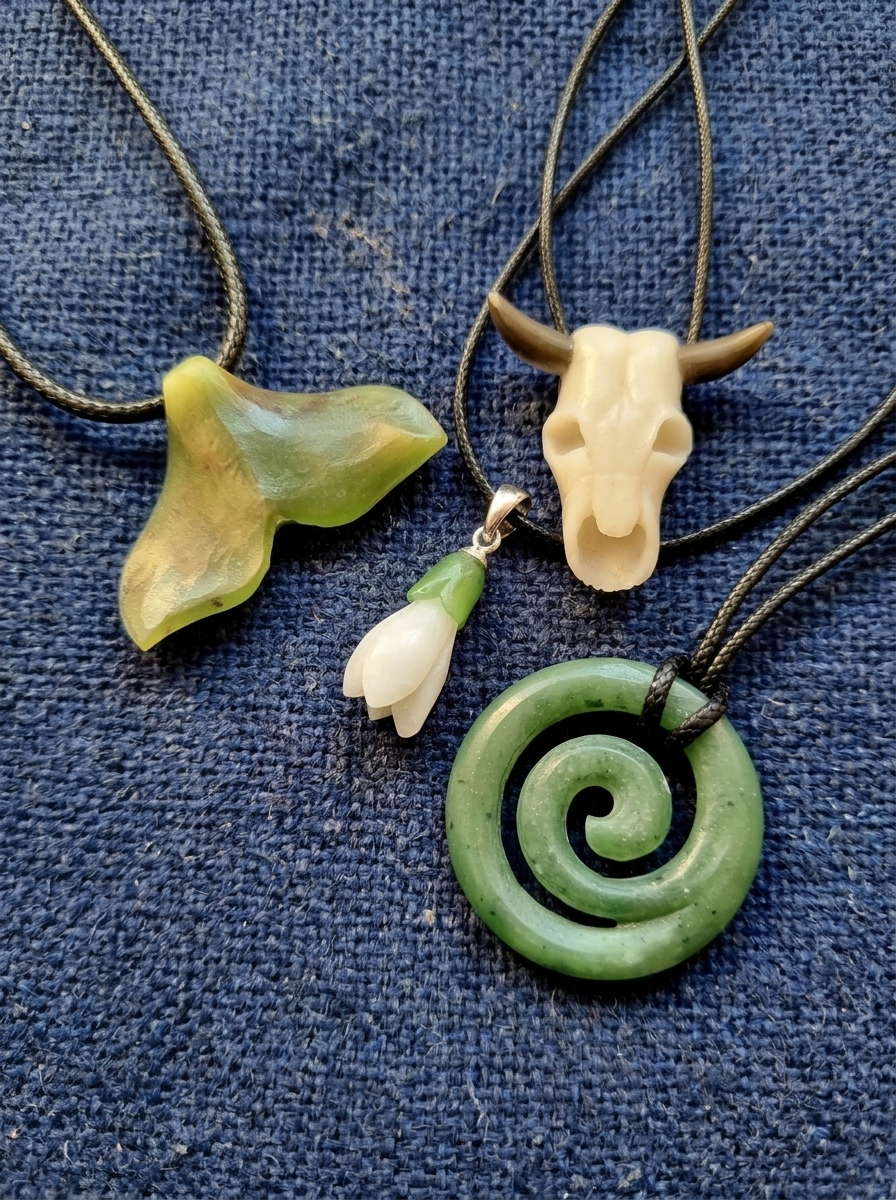
The passion for exceptional natural stones, their inherent beauty, and the stories they tell is what drives us at stone-flower.com. While rubies of the Sunrise’s caliber are once-in-a-lifetime discoveries, our commitment to sourcing and presenting natural gemstones of remarkable quality and authenticity mirrors the very principles that define such legendary pieces. We specialize in curating exquisite, hand-carved natural stone pieces, valuing the distinct character and unique geological fingerprint of each material. Our focus on craftsmanship and the inherent beauty of untouched natural stone echoes the reverence shown to a gem like the Sunrise Ruby, albeit in a different material category. Just as the Sunrise Ruby’s beauty is enhanced by its natural, untreated state, we believe in celebrating the genuine artistry of nature.
Frequently Asked Questions About the Sunrise Ruby
Q1: What makes the Sunrise Ruby so exceptionally rare?
Its extreme rarity stems from a confluence of factors: its massive 25.59-carat weight for a ruby of this quality, its perfect “pigeon’s blood” color, outstanding clarity (for a ruby), ideal cushion cut, and crucially, its unheated origin from the prized Mogok Valley in Burma. These attributes are almost never found together in a single stone of this size.
Q2: How was its authenticity and origin verified?
The Sunrise Ruby underwent rigorous testing by leading gemological laboratories, including the GIA and Gübelin. They employed advanced techniques like microscopy for inclusion analysis, UV-Vis-NIR spectroscopy for color and chemical composition, and trace element analysis to confirm its Burmese origin and, most importantly, its complete lack of heat treatment.
Q3: Why is “unheated” such a significant factor for rubies?
Over 90% of rubies on the market are heat-treated to enhance their color and clarity. An unheated ruby of high quality is immensely more valuable because it represents a truly natural phenomenon, untouched by human intervention. The absence of treatment guarantees the stone’s intrinsic beauty is exactly as nature intended, making it exponentially rarer and more desirable to collectors and connoisseurs.
Conclusion
The Sunrise Ruby is more than just a gemstone; it’s a testament to the Earth’s extraordinary power to create breathtaking beauty and a benchmark against which all other rubies are measured. Its record-breaking sale underscores the profound allure of natural perfection and the relentless pursuit of the truly exceptional. For gemologists and collectors alike, it remains a radiant symbol of rarity, a masterwork of geology, and an enduring legend in the annals of precious stones.