Jade in the Maori Culture: Pounamu, Meaning & History
Jade in the Maori culture is more than a beautiful green stone. Known as Pounamu, it carries deep connections to ancestry, identity, craftsmanship, and the natural world. For generations, Maori communities have treasured Pounamu for its strength, distinctive beauty, and cultural significance.
Jade in the Maori Culture: Pounamu Origins and Meaning
To understand the Maori connection to jade, one must first distinguish its technical composition. Unlike the jadeite found in Myanmar, New Zealand Pounamu is primarily nephrite, a calcium-magnesium silicate characterized by an interlocking fibrous structure. This specific “felted” microstructure gives the stone its legendary toughness, making it nearly impossible to shatter.
In Maori mythology, the origin of Pounamu is tied to the legend of Poutini, a taniwha (guardian spirit) who protected the stone. Geographically, it is found only in the South Island, known in Te Reo Maori as Te Wai Pounamu (“The Waters of Greenstone”).
The stone is gathered from riverbeds and beaches, where the natural action of water performs a “pre-polishing” process, revealing the deep greens and translucent hues of the Kawakawa, Kahurangi, and Inanga varieties.
Engineering Excellence: Traditional Maori Lapidary Tools
Before the arrival of metal tools, the Maori achieved a level of lapidary precision that rivals modern machinery. Processing nephrite is a grueling task due to its 6.5 Mohs hardness and extreme fracture toughness. Traditional artisans used a combination of:
- Hoanga (Sandstone Slabs): Used as abrasive whetstones with constant water lubrication to grind the stone into shape.
- Pirori (Cord Drills): Ingenious mechanical drills using a weighted flywheel and a flint or quartz tip to pierce through thick pendants.
- Quartz Sand Abrasives: Since jade is harder than many common stones, volcanic sands were used as a cutting medium to “saw” through large boulders.
This labor-intensive process meant that a single Mere (war club) or complex pendant could take months—or even years—to complete, imbuing the object with the Mana (prestige) of the maker’s dedication.
Symbolism in Design: More Than Decoration
Whale Tail Jade Pendant — Hand-Carved Green Nephrite, Soft Matte Polish to Pinterest (opens in a new window)
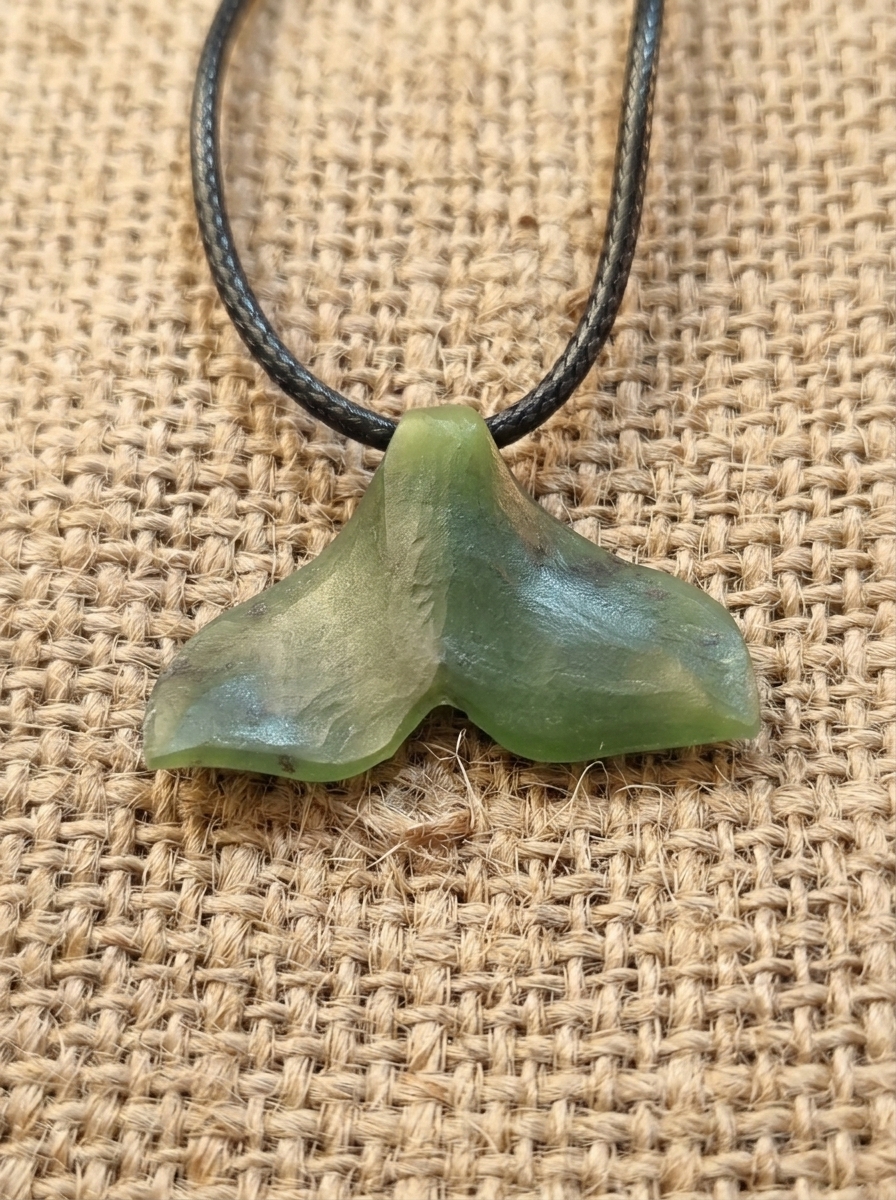
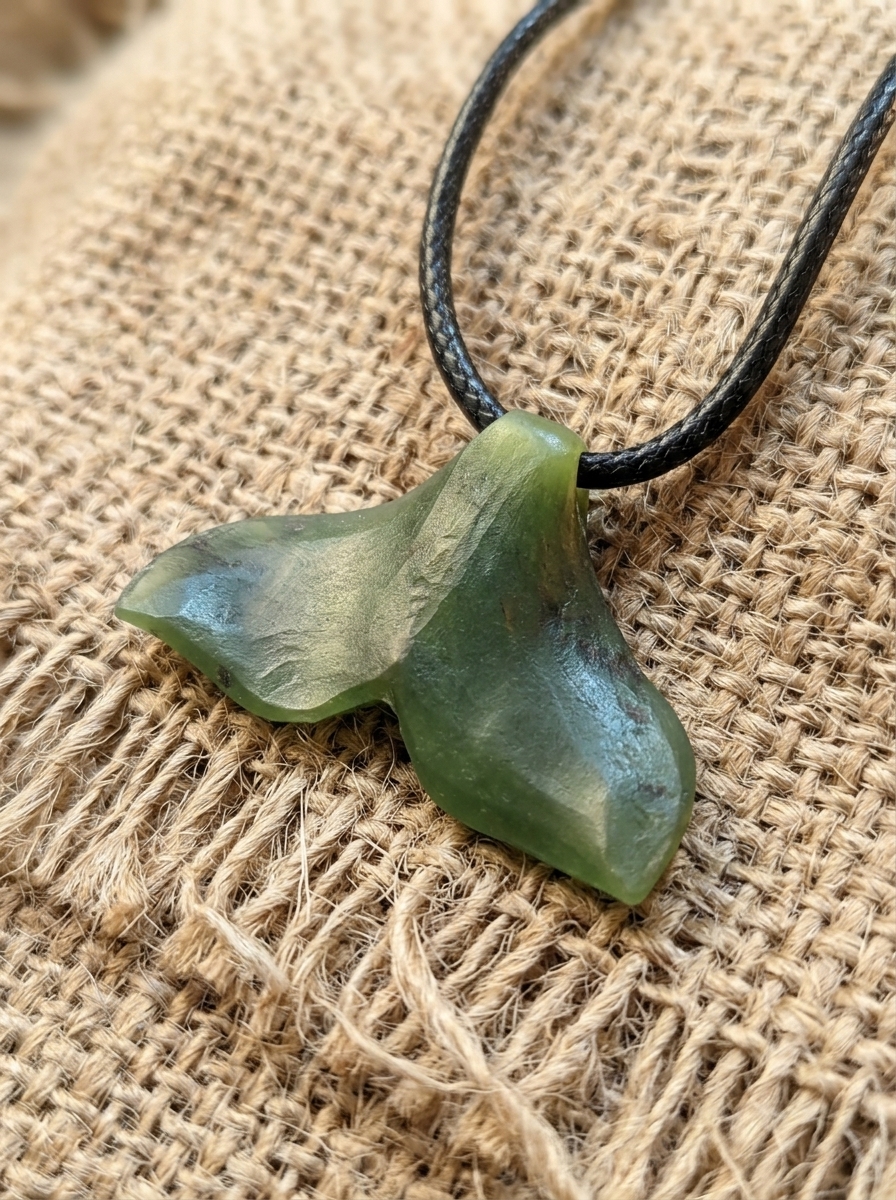
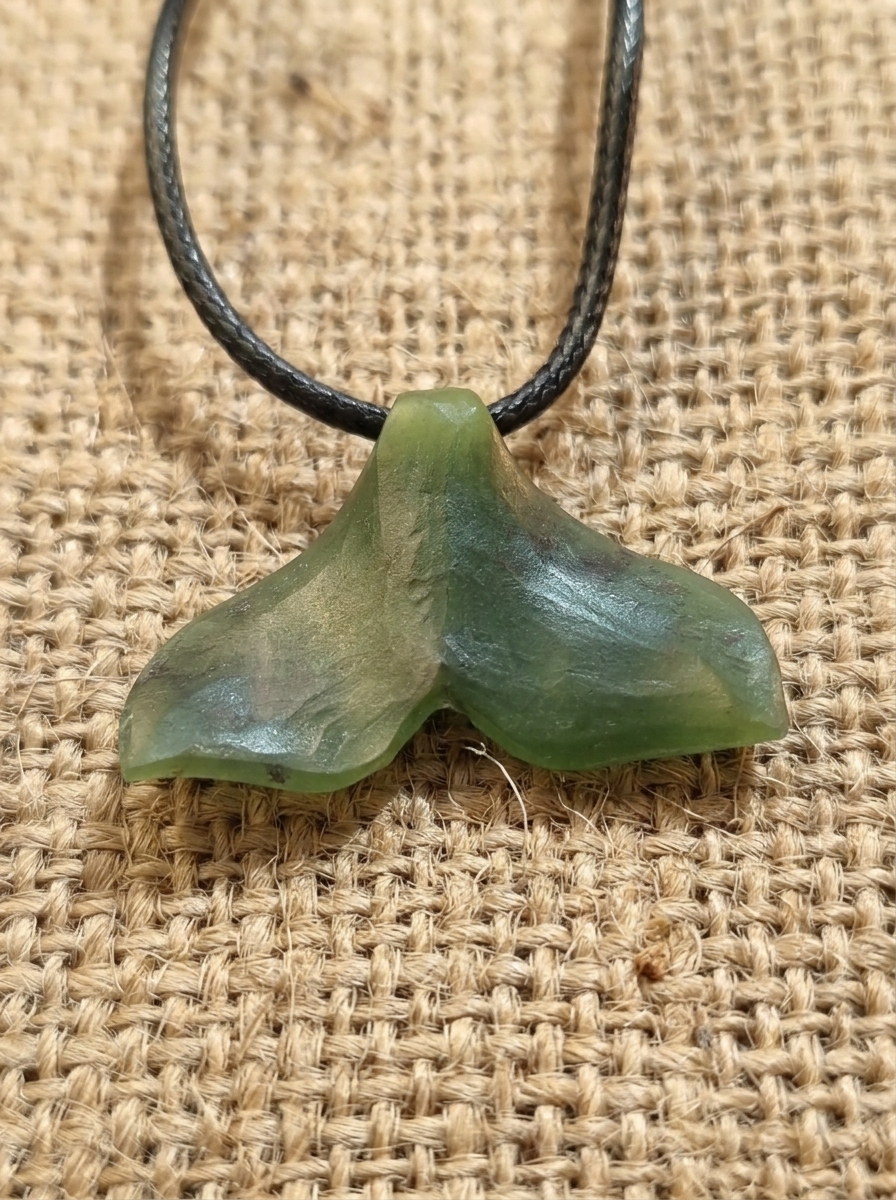
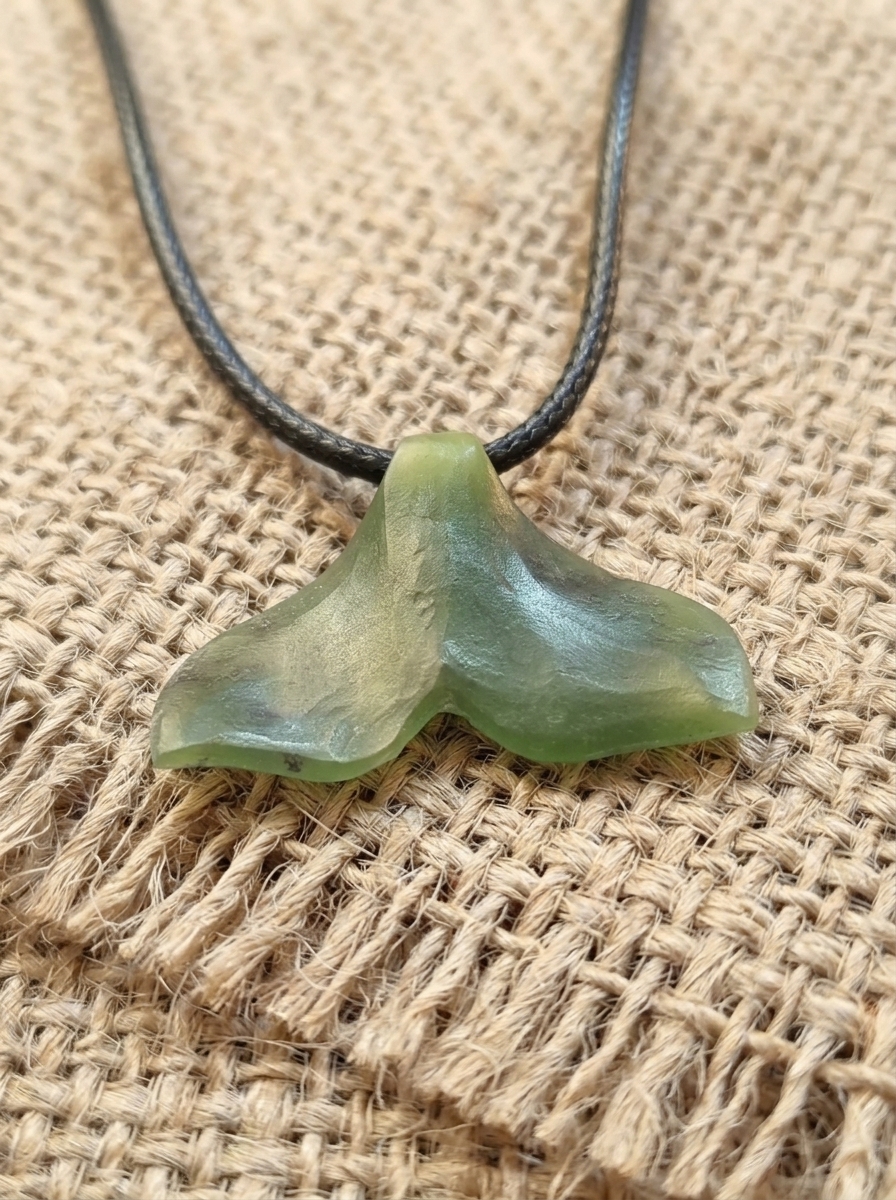
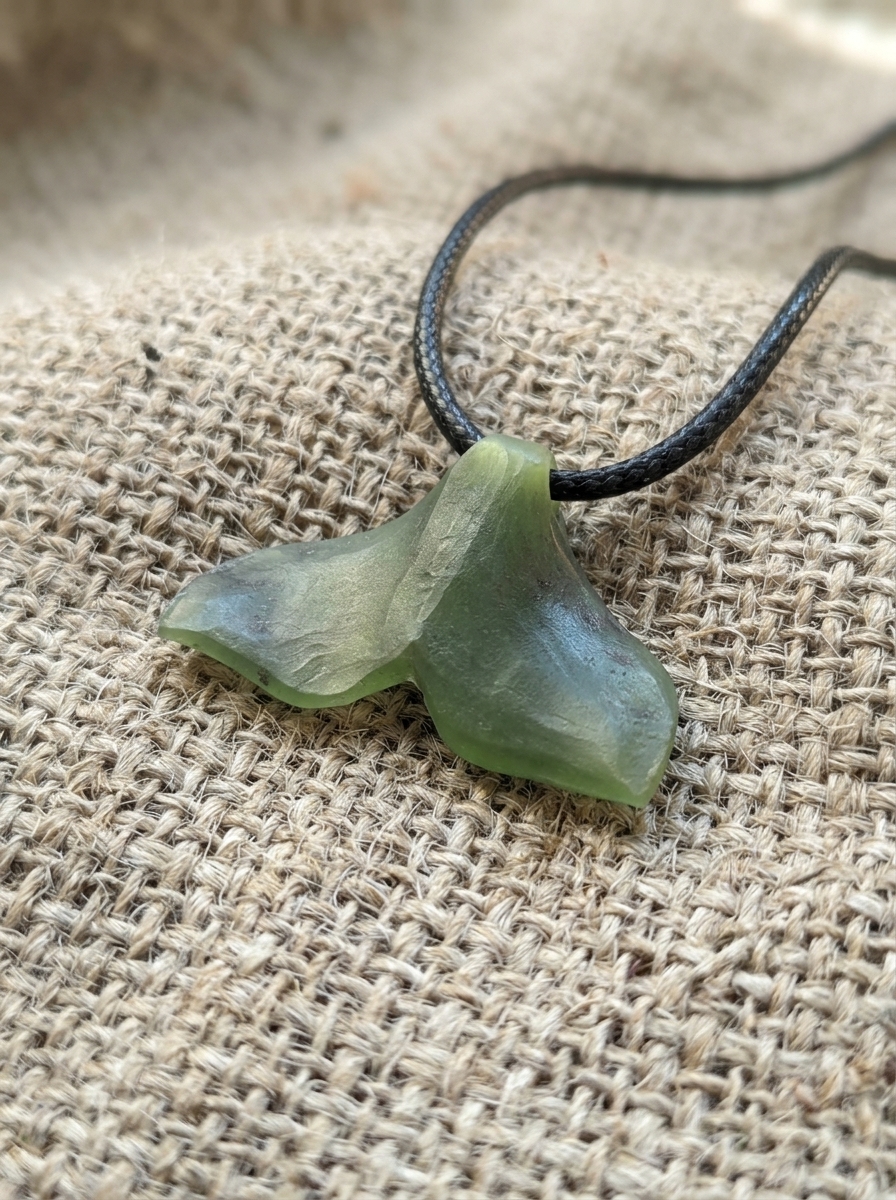
Whale Tail Jade Pendant — Hand-Carved Green Nephrite, Soft Matte Polish
$350
Hand-Carved Siberian Green Jade Whale Tail Pendant
An artisan pendant sculpted by hand from a solid piece of genuine Siberian green jade. Meticulously finished with a specialized hand polish that creates a distinctive soft, waxy-matte luster, visually and tactilely reminiscent of smooth whale skin. Completely untreated and free from lacquers, waxes, or chemical coatings, showcasing the authentic texture of natural stone.
Description
Jade whale tail pendant: This hand-carved Siberian green jade accessory is shaped as a simple whale-tail silhouette with a tactile matte finish.
Authentic Siberian Jade Whale Tail Pendant — 100% Raw & Chemical-Free Finish
An elegant hardstone pendant celebrating the fluid strength and grace of the ocean. Sculpted entirely by hand from a solid slab of premium Siberian green jade, this piece emphasizes clean contours, balanced proportions, and a modern organic aesthetic.
Craftsmanship & Highlights:
-
Authentic Siberian Jade: Hand-carved from solid, natural Siberian green jade, renowned for its exceptional toughness, even density, and rich green hue.
-
Tactile Matte Finish: Hand-polished to achieve an authentic “greasy” waxy-matte sheen rather than high gloss, subtly echoing the look and feel of real whale skin under light.
-
100% Handcrafted: Every curve, edge, and transition is shaped and refined by hand with lapidary precision.
-
Pure & Chemical-Free: No varnishes, synthetic sealants, oils, or wax coatings were used. The pendant preserves the honest cool touch and organic surface of untreated natural jade.
Specifications:
-
Item Type: Stone pendant / necklace focal
-
Primary Material: Natural Siberian Green Jade
-
Craft: Lapidary hand carving, waxy-matte hand polishing
-
Condition: Brand new, original masterwork
Jade Whale Tail Pendant: an ocean-inspired silhouette
The jade whale tail pendant translates a familiar marine shape into a compact piece of wearable sculpture. The listing describes a solid carving from natural Siberian green jade, shaped by hand with clean contours and a balanced outline. The flukes create a distinctive profile that can be recognized without elaborate decoration; the stone’s own green color and softly polished surface remain the focus. This simple composition makes the jade whale tail pendant easy to pair with different clothing styles while preserving its character as a carved object.
Unlike a printed motif or cast charm, hand-carved stone has depth along its edges and subtle transitions across the surface. The product description notes a tactile, waxy-matte finish rather than a mirror-like gloss. Light therefore falls softly across the curves, revealing the outline from different angles. Natural jade can vary in tone and pattern, and the photographs of this individual pendant should guide expectations about its appearance. No exact weight, chain, treatment certificate or other unlisted inclusion should be assumed.
As a personal accessory, the jade whale tail pendant works as a small focal point on a chain or cord suited to its fitting. Check that the connection is secure before wearing, and remove it for sport, heavy work or any activity where it could strike a hard surface. Store it separately from metal and gemstone jewelry to reduce abrasion. Jade is valued for toughness, but carved stone is not indestructible; a sharp impact can damage a narrow edge or leave a mark on the finish.
The whale-tail form can suggest movement, travel or an affinity for the sea, but its meaning is personal rather than a promised property of the stone. Here, the design is best appreciated through its proportions, hand-finished curves and natural material. Compare the photographs with the stated construction and ask about any detail that matters to you before ordering. This helps ensure that the jade whale tail pendant suits the way you plan to wear or display it.
For gemstone background, visit the Gemological Institute of America’s jade resource. Our jade polishing video guide is a separate learning product, not a care instruction for this finished pendant.

Whale Tail Jade Pendant — Hand-Carved Green Nephrite, Soft Matte Polish
$350
Hand-Carved Siberian Green Jade Whale Tail Pendant
An artisan pendant sculpted by hand from a solid piece of genuine Siberian green jade. Meticulously finished with a specialized hand polish that creates a distinctive soft, waxy-matte luster, visually and tactilely reminiscent of smooth whale skin. Completely untreated and free from lacquers, waxes, or chemical coatings, showcasing the authentic texture of natural stone.
Description
Jade whale tail pendant: This hand-carved Siberian green jade accessory is shaped as a simple whale-tail silhouette with a tactile matte finish.Authentic Siberian Jade Whale Tail Pendant — 100% Raw & Chemical-Free Finish
An elegant hardstone pendant celebrating the fluid strength and grace of the ocean. Sculpted entirely by hand from a solid slab of premium Siberian green jade, this piece emphasizes clean contours, balanced proportions, and a modern organic aesthetic.
Craftsmanship & Highlights:
-
Authentic Siberian Jade: Hand-carved from solid, natural Siberian green jade, renowned for its exceptional toughness, even density, and rich green hue.
-
Tactile Matte Finish: Hand-polished to achieve an authentic “greasy” waxy-matte sheen rather than high gloss, subtly echoing the look and feel of real whale skin under light.
-
100% Handcrafted: Every curve, edge, and transition is shaped and refined by hand with lapidary precision.
-
Pure & Chemical-Free: No varnishes, synthetic sealants, oils, or wax coatings were used. The pendant preserves the honest cool touch and organic surface of untreated natural jade.
Specifications:
-
Item Type: Stone pendant / necklace focal
-
Primary Material: Natural Siberian Green Jade
-
Craft: Lapidary hand carving, waxy-matte hand polishing
-
Condition: Brand new, original masterwork
Jade Whale Tail Pendant: an ocean-inspired silhouette
The jade whale tail pendant translates a familiar marine shape into a compact piece of wearable sculpture. The listing describes a solid carving from natural Siberian green jade, shaped by hand with clean contours and a balanced outline. The flukes create a distinctive profile that can be recognized without elaborate decoration; the stone’s own green color and softly polished surface remain the focus. This simple composition makes the jade whale tail pendant easy to pair with different clothing styles while preserving its character as a carved object. Unlike a printed motif or cast charm, hand-carved stone has depth along its edges and subtle transitions across the surface. The product description notes a tactile, waxy-matte finish rather than a mirror-like gloss. Light therefore falls softly across the curves, revealing the outline from different angles. Natural jade can vary in tone and pattern, and the photographs of this individual pendant should guide expectations about its appearance. No exact weight, chain, treatment certificate or other unlisted inclusion should be assumed. As a personal accessory, the jade whale tail pendant works as a small focal point on a chain or cord suited to its fitting. Check that the connection is secure before wearing, and remove it for sport, heavy work or any activity where it could strike a hard surface. Store it separately from metal and gemstone jewelry to reduce abrasion. Jade is valued for toughness, but carved stone is not indestructible; a sharp impact can damage a narrow edge or leave a mark on the finish. The whale-tail form can suggest movement, travel or an affinity for the sea, but its meaning is personal rather than a promised property of the stone. Here, the design is best appreciated through its proportions, hand-finished curves and natural material. Compare the photographs with the stated construction and ask about any detail that matters to you before ordering. This helps ensure that the jade whale tail pendant suits the way you plan to wear or display it. For gemstone background, visit the Gemological Institute of America’s jade resource. Our jade polishing video guide is a separate learning product, not a care instruction for this finished pendant.Jade in the Maori culture is expressed through forms that carry genealogical and philosophical meaning. To explore a related example from our collection, view this hand-carved jade pendant.
The Hei-Tiki: Ancestral Connection
Perhaps the most famous form, the Hei-Tiki represents the first human or a powerful ancestor. It is a vessel for Whakapapa (genealogy). These were often passed down through generations; the more a Tiki was worn, the more “soul” it absorbed from its previous owners.
The Koru: New Life and Growth
Explore another example: a hand-carved jade snowdrop pendant.

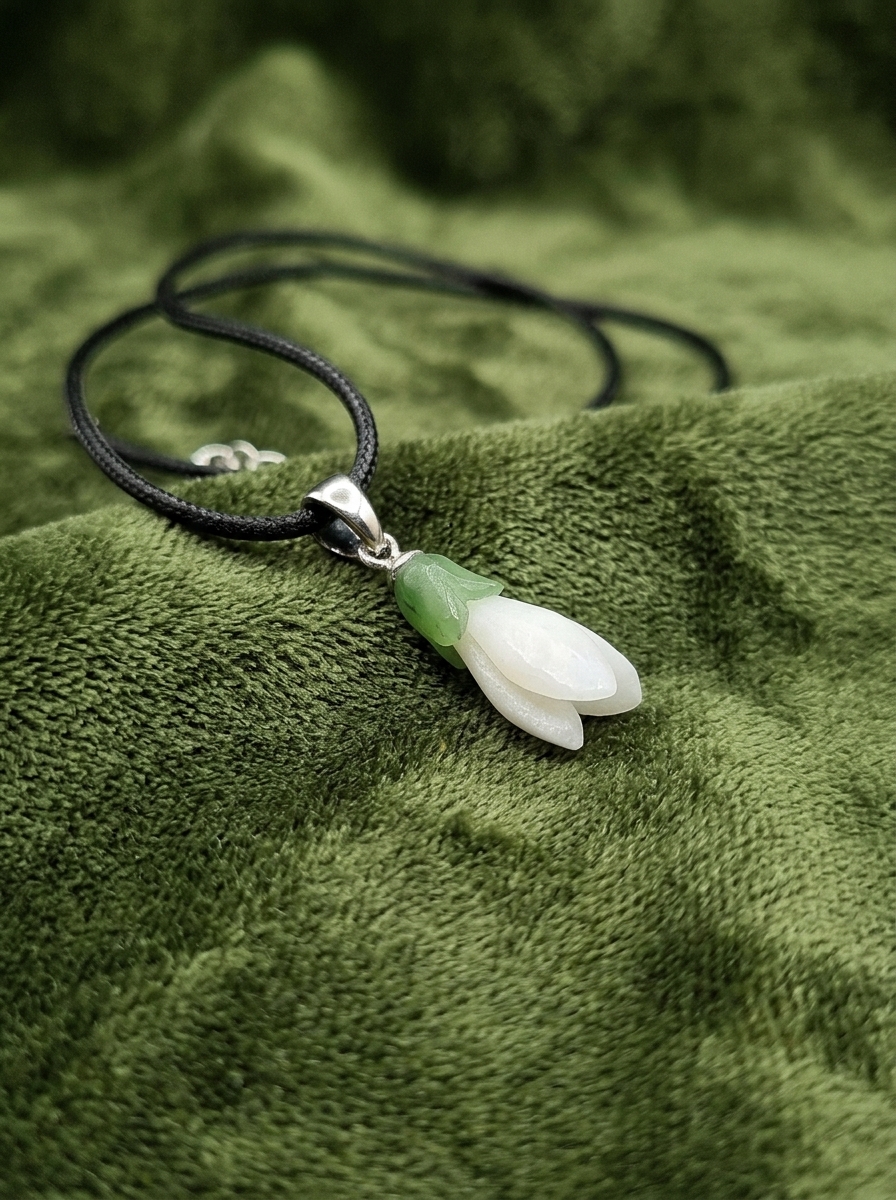
Snowdrop Jade Pendant — White & Green Siberian Nephrite, Hand-Carved, 2.5 cm
Hand-Carved Siberian Jade "Snowdrop" Pendant (2.5 cm)
A delicate botanical flower pendant measuring 2.5 cm in length, hand-carved from genuine Siberian jade. Features three sculpted petals of translucent white jade beneath a rich green jade sepal. Finished with meticulous hand polishing without waxes, varnishes, or chemical sealants, highlighting the pure natural luster of the stone. Fitted with a hypoallergenic medical-grade metal bail on a cord.
Inspired by the unfolding frond of the silver fern, the Koru symbolizes perpetual movement, personal growth, and the beginning of a new journey. It is a favorite gift for milestones like weddings or the birth of a child.
The Hei Matau: The Fish Hook
Reflecting the Maori dependence on the sea, the Hei Matau represents strength, determination, and safe travel over water. It pays homage to the legend of Maui, who fished up the North Island using a magical hook.
The Concept of Mana and Tapu
Jade in the Maori culture is closely connected with Tapu (sacredness) and Mana (prestige and authority). Some traditions hold that Pounamu should be received as a gift rather than purchased for oneself. Gift-giving can represent a bond between people, while the stone itself carries personal and family histories. Pounamu is also valued for its lasting beauty and the skill required to shape it.
 Modern Preservation and Ethical Sourcing
Today, jade in the Maori culture remains connected to the stewardship of Pounamu. Under the Ngāi Tahu Claims Settlement Act 1998, ownership of naturally occurring Pounamu in the South Island was returned to Ngāi Tahu. This framework supports responsible management of the resource and respect for the cultural significance of designs. Contemporary artists may combine traditional knowledge with modern tools to create detailed carvings that reveal the stone’s natural colors and patterns.
Contemporary artists may combine traditional knowledge with modern tools to create detailed carvings that reveal the stone’s natural colors and patterns.
Conclusion: A Living Legacy
The role of jade in Maori culture reflects an enduring relationship between people, craftsmanship, and the natural world. From a Mere to a Koru, Pounamu forms part of Aotearoa’s living heritage. Learning about jade in the Maori culture offers context for the meanings associated with these forms and the care taken in working the stone. Explore our jade collection to see hand-carved pieces made from natural jade.
Frequently Asked Questions
1. What is the difference between Pounamu and Greenstone?
“Greenstone” is a generic term used by early European explorers to describe the green rocks used by Maori. Pounamu is the specific Maori name for New Zealand nephrite jade and bowenite, which carry deep spiritual and cultural significance.
2. Can I buy a jade pendant for myself?
Some Maori traditions suggest that Pounamu is best received as a gift. Today, people may also choose a piece themselves, guided by personal meaning and respect for its cultural context. If purchasing jade, learn about its origin and the artist’s relationship to the material.
3. How should I care for my Maori jade jewelry?
Because nephrite is incredibly durable, it requires little maintenance. However, it loves the natural oils from your skin. To clean it, simply use warm water and a soft cloth. Avoid harsh chemicals that could affect the stone’s surface polish.