How to Re-Polish Jade at Home: A Professional Guide
You’ve noticed it—the once-vibrant, deep luster of your favorite jade piece has turned cloudy or dull. Whether it’s a family heirloom or a daily-wear pendant, jade is a “living” stone that absorbs its environment. Over time, skin oils, microscopic abrasions, and dust can rob the stone of its signature “mutton fat” or “glassy” sheen. But here is the good news: you don’t need a lapidary workshop to restore it. With the right grit sequence and a bit of patience, you can achieve a professional-grade finish at your kitchen table.Understanding Your Jade: Nephrite vs. Jadeite
- Nephrite: Known for its extreme toughness due to an interlocking fibrous structure. It usually polishes to a waxy or resinous luster.
- Jadeite: Rarer and harder than nephrite. It features a granular crystal structure and takes a vitreous (glass-like) polish.
The Essential DIY Toolkit
To re-polish jade without heavy machinery, you will need the following materials. Do not skip the higher grits; the secret to a mirror finish is the transition between 1,000 and 3,000 grit.- Silicon Carbide (SiC) Sandpaper: Waterproof sheets in grits 400, 600, 1200, and 3000.
- Diamond Paste or Cerium Oxide: For the final “pop.” 50,000 mesh diamond paste is ideal for jadeite.
- Leather or Felt Scrap: To be used as a polishing pad.
- Lubricant: Water is sufficient, though a drop of dish soap helps reduce surface tension.
- Microfiber cloth: For constant inspection.
Sale!
Watch Video Guide How to Remove Scratches and Polish Jade at Home by Hand (No Power Tools) to Pinterest (opens in a new window)
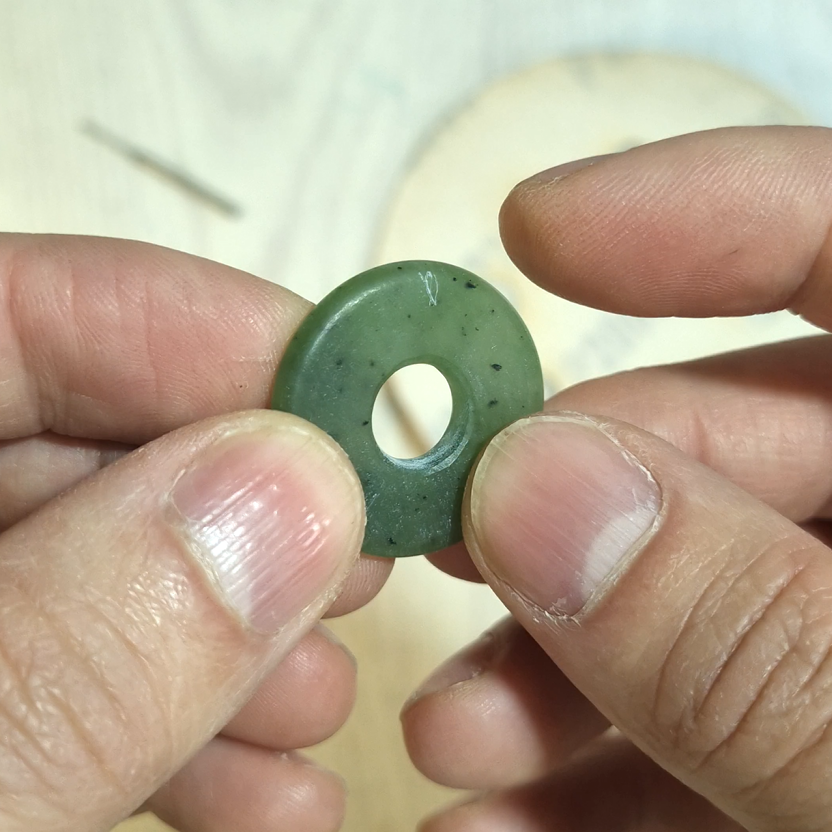
Watch Video Guide How to Remove Scratches and Polish Jade at Home by Hand (No Power Tools)
Original price was: $19.$9Current price is: $9.
Узнайте, как удалить царапины и отполировать нефрит вручную с помощью этого пошагового видеоруководства. Электроинструменты не требуются; следуйте методу резчика по камню.
Description
Polish jade by hand with this educational video guide to surface care and scratch removal without power tools. The product is a video resource for people interested in learning about a traditional, hands-on approach to jade polishing. It is not a piece of jade jewelry, a polishing kit, or a promise that every mark can be removed. Review the product details for current information about access and delivery before ordering.
Polish jade by hand: what the video guide covers
This guide focuses on the idea of working by hand rather than relying on powered equipment. A video demonstration can help viewers follow a process in context and think about how careful handling, steady attention, and a measured pace may affect surface work. The material is intended as general education; it should not be taken as a guarantee of a particular finish or as a substitute for advice from a qualified stone professional.
Understand the stone before you begin
Jade is a natural gemstone, and the name is commonly used for jadeite and nephrite. A stone’s identity, condition, shape, previous treatment, and existing finish all matter when considering any form of polishing. A light surface mark is different from a deep scratch, a crack, or damage to a carved or mounted object. Because an unsuitable abrasive or too much pressure can alter the surface, do not assume that one approach is appropriate for every stone.
Before attempting any hands-on work, look closely at the item and consider its value and construction. If it is an heirloom, a valuable carving, a cracked piece, or a gemstone set in jewelry, consult an experienced lapidary or jeweler first. Practising only on a low-value sample that you are willing to risk is a more cautious way to explore a new technique. Stop if the stone behaves unexpectedly or if you are unsure how to proceed.
Plan a careful manual polishing approach
Polish jade by hand only after thinking through the surface, the desired outcome, and the limits of your experience. Manual work can require patience and close observation; it is not necessarily a quick fix. Work in a suitable, well-organized area, handle the object securely, and follow appropriate safety guidance for any materials or tools involved. This description does not prescribe a particular abrasive, pressure, sequence, or treatment, since the right choice depends on the individual stone and the method shown in the video.
The phrase “without power tools” describes the topic of this guide, not a claim that powered equipment is always wrong or that a hand method will remove every scratch. Some marks may be too deep to improve safely, and changing one area can affect the surrounding finish. The aim is to help viewers understand the subject and make more informed decisions, not to promise identical results across different stones and projects.
Who may find this jade polishing video useful
This video guide may suit viewers who want an introduction to hand polishing, enjoy learning from demonstrations, or are comparing approaches to small-scale stone care. Beginners can use it to become more familiar with the topic before deciding whether to practise, while experienced makers may find it useful as a point of comparison with their own established methods. No prior result is guaranteed, and the guide should be considered alongside the viewer’s own knowledge and the condition of the object.
If your goal is to care for an important piece, first identify the material and seek an independent assessment where needed. A professional can help distinguish a surface scratch from a structural issue and advise whether intervention is appropriate. Protecting the stone may be more important than achieving a uniformly glossy appearance. When in doubt, avoid experimenting on an object whose finish, setting, or value you cannot afford to compromise.
Set realistic expectations and learn more
Polish jade by hand is a useful phrase for describing the subject of this tutorial, but it should not be read as a universal instruction for every gemstone. Outcomes depend on the object, its material, prior treatments, the depth of any mark, and the technique used. The video is educational content rather than a repair service, a physical product, or a substitute for professional evaluation. Check the product page for the current terms of access and any details about what is included.
For independent background on jade, see the Gemological Institute of America information about jade. You can also browse other work and resources on the Stone-flower website. Use reliable sources to learn about the stone, take a cautious approach to hands-on care, and seek professional help for valuable or damaged pieces.
Viewers exploring how to polish jade by hand should begin with observation rather than assumptions. Compare the mark with the surrounding surface, note any cracks or previous repairs, and decide whether the item is suitable for practice. These checks do not replace gem identification or a professional opinion, but they can help prevent a rushed decision. If the object has personal or financial value, pause and ask a qualified specialist before attempting any treatment.
Learning about stone care takes time, and a video can only show information within its own scope. Watch with the aim of understanding the approach, then consider whether it applies to your specific material and circumstances. Do not copy a technique if the stone, tools, or working conditions differ from what is demonstrated. A careful decision may be to leave the surface as it is or to seek professional restoration.
This product is presented as a jade polishing video guide for educational viewing. It does not include a claim of guaranteed scratch removal, a custom assessment, or a physical polishing service. Please use the product information on this page to confirm the purchase details that matter to you. For valued pieces, prioritize preservation and expert advice over experimentation, and remember that results can vary from one stone and project to another.
Sale!
Watch Video Guide How to Remove Scratches and Polish Jade at Home by Hand (No Power Tools) to Pinterest (opens in a new window)

Watch Video Guide How to Remove Scratches and Polish Jade at Home by Hand (No Power Tools)
Original price was: $19.$9Current price is: $9.
Узнайте, как удалить царапины и отполировать нефрит вручную с помощью этого пошагового видеоруководства. Электроинструменты не требуются; следуйте методу резчика по камню.
Description
Polish jade by hand with this educational video guide to surface care and scratch removal without power tools. The product is a video resource for people interested in learning about a traditional, hands-on approach to jade polishing. It is not a piece of jade jewelry, a polishing kit, or a promise that every mark can be removed. Review the product details for current information about access and delivery before ordering.Polish jade by hand: what the video guide covers
This guide focuses on the idea of working by hand rather than relying on powered equipment. A video demonstration can help viewers follow a process in context and think about how careful handling, steady attention, and a measured pace may affect surface work. The material is intended as general education; it should not be taken as a guarantee of a particular finish or as a substitute for advice from a qualified stone professional.Understand the stone before you begin
Jade is a natural gemstone, and the name is commonly used for jadeite and nephrite. A stone’s identity, condition, shape, previous treatment, and existing finish all matter when considering any form of polishing. A light surface mark is different from a deep scratch, a crack, or damage to a carved or mounted object. Because an unsuitable abrasive or too much pressure can alter the surface, do not assume that one approach is appropriate for every stone. Before attempting any hands-on work, look closely at the item and consider its value and construction. If it is an heirloom, a valuable carving, a cracked piece, or a gemstone set in jewelry, consult an experienced lapidary or jeweler first. Practising only on a low-value sample that you are willing to risk is a more cautious way to explore a new technique. Stop if the stone behaves unexpectedly or if you are unsure how to proceed.Plan a careful manual polishing approach
Polish jade by hand only after thinking through the surface, the desired outcome, and the limits of your experience. Manual work can require patience and close observation; it is not necessarily a quick fix. Work in a suitable, well-organized area, handle the object securely, and follow appropriate safety guidance for any materials or tools involved. This description does not prescribe a particular abrasive, pressure, sequence, or treatment, since the right choice depends on the individual stone and the method shown in the video. The phrase “without power tools” describes the topic of this guide, not a claim that powered equipment is always wrong or that a hand method will remove every scratch. Some marks may be too deep to improve safely, and changing one area can affect the surrounding finish. The aim is to help viewers understand the subject and make more informed decisions, not to promise identical results across different stones and projects.Who may find this jade polishing video useful
This video guide may suit viewers who want an introduction to hand polishing, enjoy learning from demonstrations, or are comparing approaches to small-scale stone care. Beginners can use it to become more familiar with the topic before deciding whether to practise, while experienced makers may find it useful as a point of comparison with their own established methods. No prior result is guaranteed, and the guide should be considered alongside the viewer’s own knowledge and the condition of the object. If your goal is to care for an important piece, first identify the material and seek an independent assessment where needed. A professional can help distinguish a surface scratch from a structural issue and advise whether intervention is appropriate. Protecting the stone may be more important than achieving a uniformly glossy appearance. When in doubt, avoid experimenting on an object whose finish, setting, or value you cannot afford to compromise.Set realistic expectations and learn more
Polish jade by hand is a useful phrase for describing the subject of this tutorial, but it should not be read as a universal instruction for every gemstone. Outcomes depend on the object, its material, prior treatments, the depth of any mark, and the technique used. The video is educational content rather than a repair service, a physical product, or a substitute for professional evaluation. Check the product page for the current terms of access and any details about what is included. For independent background on jade, see the Gemological Institute of America information about jade. You can also browse other work and resources on the Stone-flower website. Use reliable sources to learn about the stone, take a cautious approach to hands-on care, and seek professional help for valuable or damaged pieces. Viewers exploring how to polish jade by hand should begin with observation rather than assumptions. Compare the mark with the surrounding surface, note any cracks or previous repairs, and decide whether the item is suitable for practice. These checks do not replace gem identification or a professional opinion, but they can help prevent a rushed decision. If the object has personal or financial value, pause and ask a qualified specialist before attempting any treatment. Learning about stone care takes time, and a video can only show information within its own scope. Watch with the aim of understanding the approach, then consider whether it applies to your specific material and circumstances. Do not copy a technique if the stone, tools, or working conditions differ from what is demonstrated. A careful decision may be to leave the surface as it is or to seek professional restoration. This product is presented as a jade polishing video guide for educational viewing. It does not include a claim of guaranteed scratch removal, a custom assessment, or a physical polishing service. Please use the product information on this page to confirm the purchase details that matter to you. For valued pieces, prioritize preservation and expert advice over experimentation, and remember that results can vary from one stone and project to another.Step-by-Step Restoration Process
Step 1: The Deep Clean
Before sanding, remove all surface contaminants. Use lukewarm water and a soft-bristled brush. Avoid ultrasonic cleaners or harsh chemicals, as many jade pieces are Type B (polymer impregnated) or Type C (dyed). Harsh chemicals can degrade the resins used to stabilize the stone.Step 2: Correcting Surface Imperfections (400–600 Grit)
If your jade has visible scratches, start with 400-grit wet/dry sandpaper. Always sand wet. Water acts as a coolant and prevents the stone’s dust from entering your lungs—a critical safety step in lapidary work. Use a circular motion. Your goal here isn’t to make it shine; it’s to create a perfectly uniform, matte surface. Once all deep scratches are replaced by the uniform scratches of the 400-grit, move to 600-grit to refine the texture.Step 3: Pre-Polishing (1200–3000 Grit)
Explore a related in-stock jade piece from Stone-Flower:
Snowdrop Jade Pendant — White & Green Siberian Nephrite, Hand-Carved, 2.5 cm to Pinterest (opens in a new window)

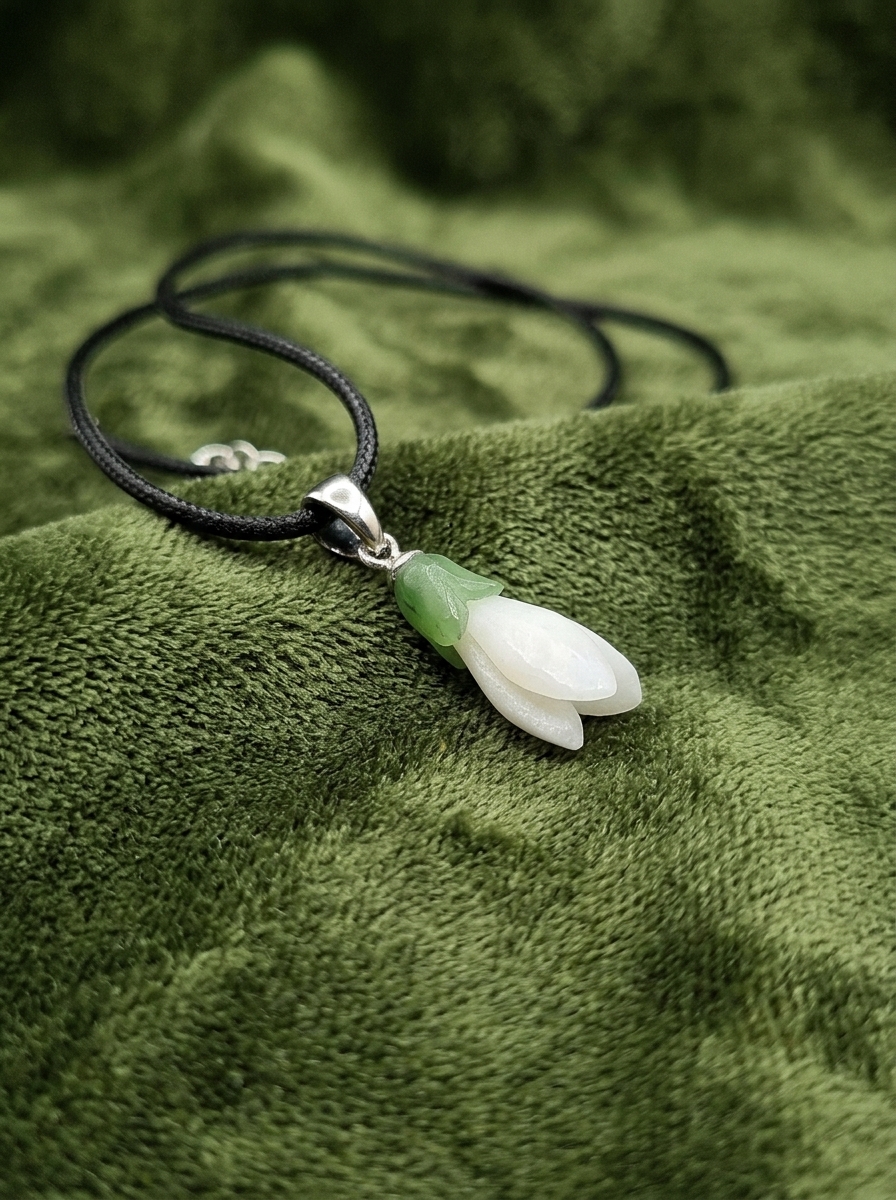
Snowdrop Jade Pendant — White & Green Siberian Nephrite, Hand-Carved, 2.5 cm
Hand-Carved Siberian Jade "Snowdrop" Pendant (2.5 cm)
A delicate botanical flower pendant measuring 2.5 cm in length, hand-carved from genuine Siberian jade. Features three sculpted petals of translucent white jade beneath a rich green jade sepal. Finished with meticulous hand polishing without waxes, varnishes, or chemical sealants, highlighting the pure natural luster of the stone. Fitted with a hypoallergenic medical-grade metal bail on a cord.
Step 4: The Final Buff (The Pro Secret)
 To achieve that wet, high-gloss look seen in high-end jewelry, you need a polishing compound. Apply a pea-sized amount of Cerium Oxide or 0.5-micron diamond paste to a piece of firm leather (the “flesh” side).
Rub the jade against the leather with significant pressure. The heat generated by friction helps the compound react with the surface of the stone to create a Beilby layer—a microscopically thin, amorphous layer that gives gems their ultimate shine.
Why Technique Matters
One common mistake is “over-polishing” one spot. This creates a lens effect that distorts how light travels through the stone. Always treat the surface as a whole. If you are working on a Jade Pendant, ensure you follow the contours of the carving. For intricate areas, use a dampened toothpick dipped in diamond paste to reach the crevices. Expert Tip: If you are working with Nephrite, don’t be discouraged if it doesn’t look like glass. High-quality Nephrite is prized for its “oily” feel and soft glow, whereas Jadeite is expected to be reflective.Maintaining Your Jade
Once restored, keep your jade away from perfumes and hairsprays. The porous nature of the stone means these chemicals can seep into micro-fissures, dulling the polish over time. Simply wipe it with a damp microfiber cloth after wearing. If you find that your stone is too damaged for a DIY fix, or if you’re looking to add a professionally finished piece to your collection, you can browse and buy authentic jade pendants on our website. We ensure every piece is polished to its maximum optical potential using traditional and modern lapidary techniques.Frequently Asked Questions
1. Can I use a Dremel tool to polish my jade?
Yes, but be careful. High RPMs can generate excessive heat, which may cause the jade to crack or “burn” the polishing compound into the stone. Always use the lowest speed setting and keep the stone wet.2. Why does my jade look cloudy after sanding?
This usually means you skipped a grit level or didn’t sand long enough at the 1200-grit stage. The cloudiness is actually thousands of tiny scratches. Go back to 600-grit and work your way up more slowly.3. Is it safe to polish dyed jade?
Polishing dyed jade (Type C) can be risky. The dye often resides near the surface, and aggressive sanding can remove the color, revealing a pale or greyish interior. Always test a small, inconspicuous area first.Meta Description: Learn how to re-polish jade at home with this expert guide. Master the grit sequence and professional buffing techniques to restore your jade’s shine.